
The Business Plan Outline Every Online Sales Professional Needs
Overview
Introduction
You know the feeling. You wake up excited to work from home, but by noon you are just reacting to emails and hoping something sticks.

Many online sales professionals jump straight into prospecting without a real plan. And that is exactly why so many talented people struggle with income uncertainty and slow career growth.
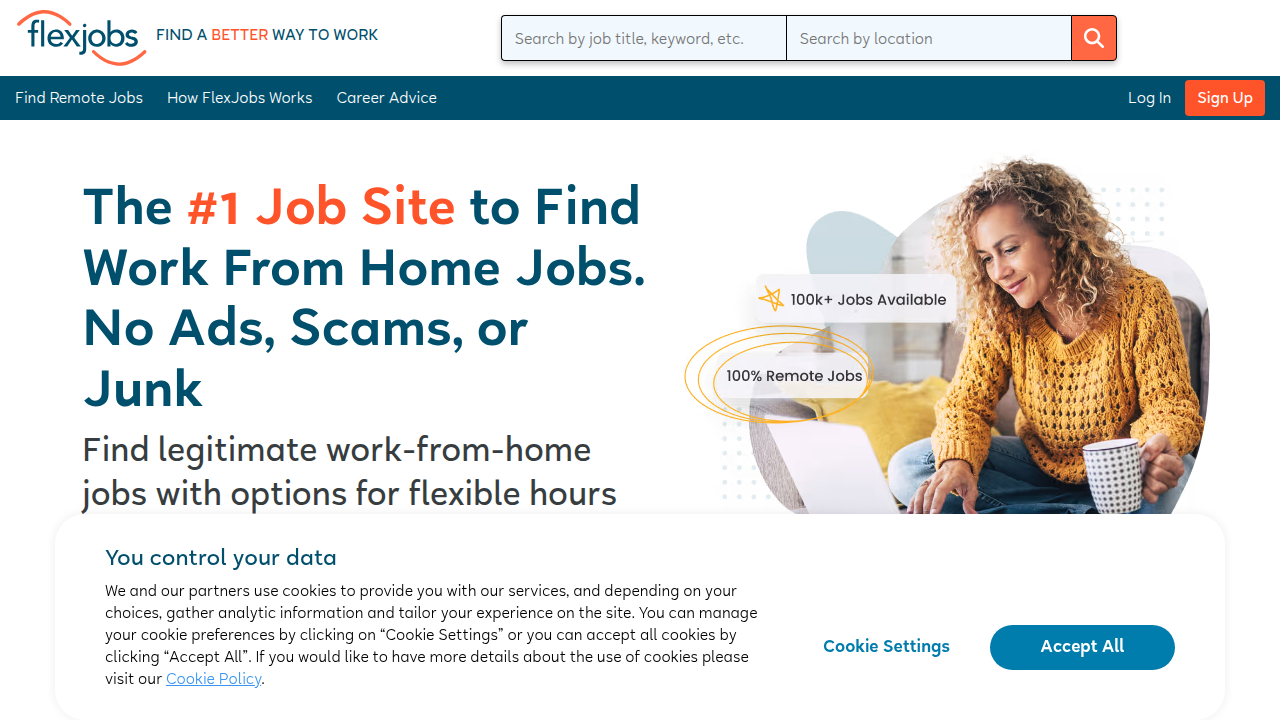
Here is the reality check. Remote sales jobs are booming right now. Data from FlexJobs shows that sales and business development roles had the highest growth in fully remote positions in 2026.
But even with all these opportunities, most sales reps still work without a clear strategy.
That is where a business plan outline changes everything.
Think of it as your personal roadmap. A solid business plan outline helps you turn ambition into steady income. It gives you direction when leads go cold and shows you exactly what to do next. Whether you are a job seeker hunting for your first remote role or a career switcher looking for a fresh start, having a written plan keeps you focused.
This guide gives you a simple step-by-step business plan outline built specifically for online sales roles. No fluff. No corporate jargon. Just practical steps you can use today.
If you are also working on how you present yourself to employers, check out our guide on creating a business proposal template that makes you stand out.
Let us get you that plan.
Why Online Sales Professionals Need a Business Plan
Think about your typical week in remote sales. You might spend Monday morning checking emails, then jump into LinkedIn to send random connection requests. By Friday, you wonder where the week went and why your pipeline still looks thin. Without a clear plan, you are guessing your way through every day.
That is where a business plan outline becomes your best tool.
First, a plan gives you a real roadmap. It forces you to define your target markets, set specific revenue goals, and map out the skills you need to develop. Instead of chasing every lead that looks warm, you focus on specific customer groups where you have the best shot. This is especially important in 2026 because remote sales roles are still growing fast. According to the FlexJobs Remote Work Index, sales and business development had the highest growth in fully remote jobs. But more opportunities also mean more competition. A solid business plan helps you stand out by showing you have direction.
Second, a written plan builds credibility. If you ever pitch to clients or investors for a sales agency or a side hustle, they want to see you think ahead. A simple one page business plan outline shows you understand your market, your numbers, and your growth path. It turns you from someone who "does sales" into a real professional. For examples, you can look at basic business plan examples online, but the key is to tailor it to your specific remote sales role.
Third, a plan reduces the anxiety that comes with commission based income. When your earnings depend on closing deals, slow weeks can feel scary. A business plan outline helps you project your income across the quarter and build fallback strategies. You plan for the slow months and set milestones to keep you motivated. That peace of mind lets you focus on selling instead of worrying.
If you want to go deeper on how to structure your approach, check out our guide on STP in marketing for a simple way to segment your audience and position your offers.
A plan is not just for business owners. Every remote sales pro needs one. Let us build yours step by step.
Core Components of a Winning Online Sales Business Plan Outline
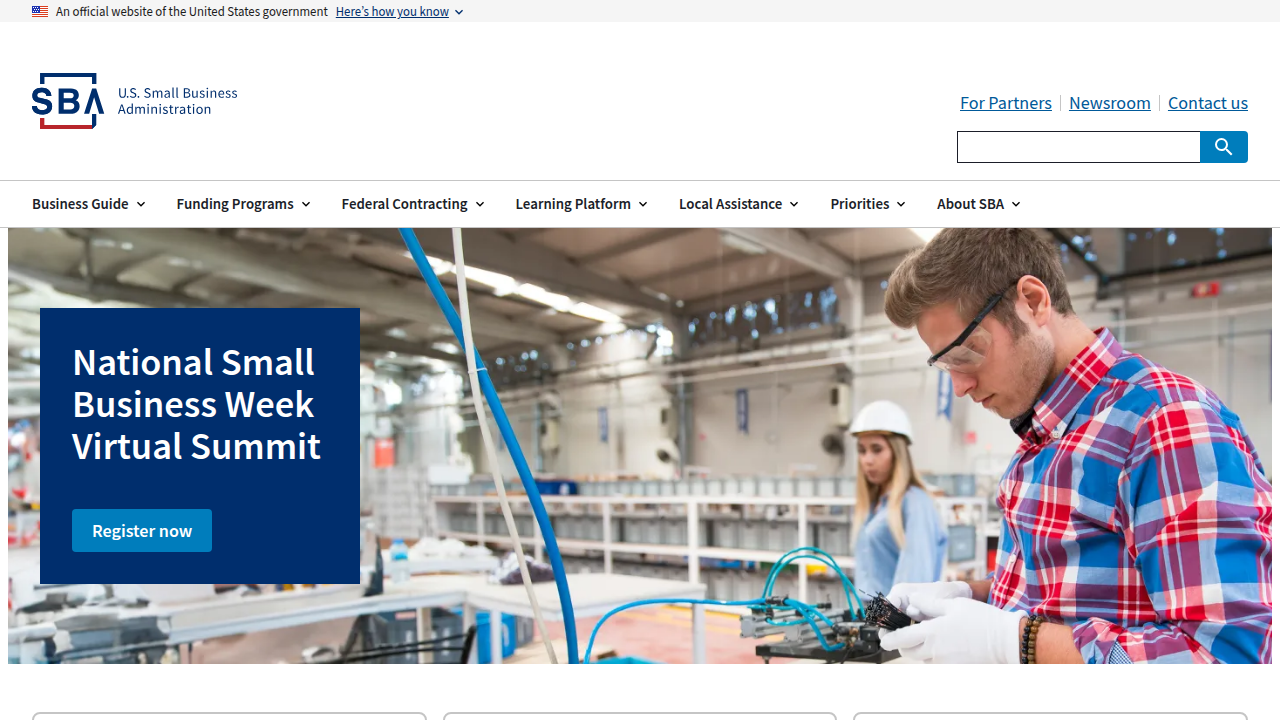
Now that you know why a business plan matters, let us look at what goes inside it. A standard business plan has several key sections, and the U.S. Small Business Administration lists nine core parts.
But for remote sales, some sections matter more than others. You need to adapt each one to your world of virtual prospecting, commission checks, and working from home.
Here is a breakdown of the essential sections in your business plan outline, tailored for online sales.
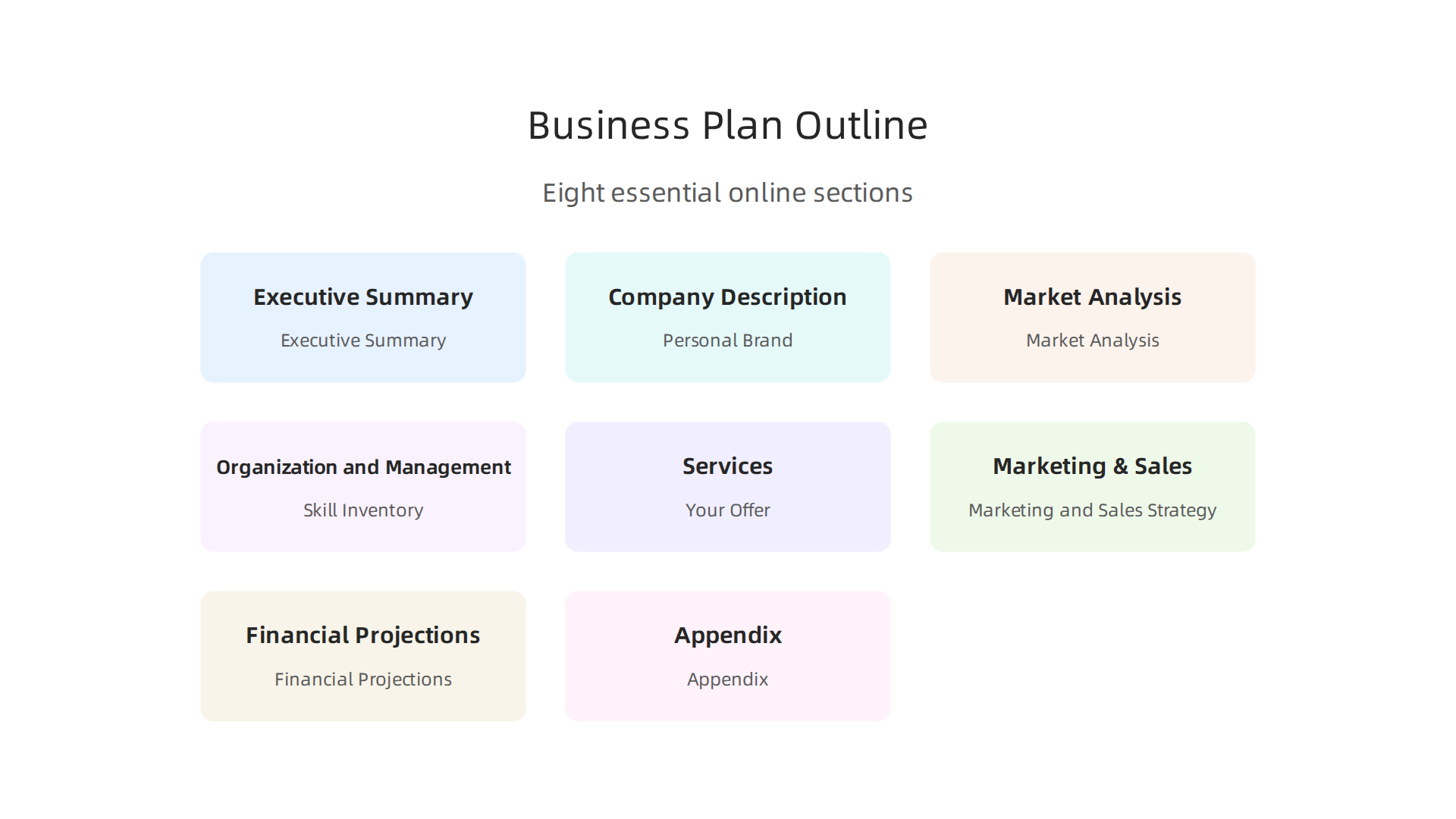
1. Executive Summary
This is your elevator pitch in writing. It sums up who you are, what you sell, your target market, and your goals. Keep it short, one page max. Write it last so it captures the whole plan.
2. Company Description (Your Personal Brand)
Instead of describing a company, describe yourself. What is your personal value proposition? Why should a client or employer choose you? List your niche, your strengths, and the specific problems you solve. For example, "I help small e-commerce brands grow revenue through cold email and LinkedIn outreach."
3. Market Analysis
Who are you selling to? Define your ideal customer profiles. Use data from your past sales or industry research. The QuickBooks free business plan template recommends including market potential and competitive analysis. In remote sales, your competition is not just other reps but also automation tools and AI. Know where you fit.
4. Organization and Management
In a traditional plan, this is about company structure. For you, it is about your skill inventory. List your top skills: CRM expertise (like Salesforce or HubSpot), virtual presentation, negotiation, and time management. If you plan to build a team later, map that out too. For guidance, check out this article on mastering AI digital marketing for online sales jobs to see how tech skills fit your structure.
5. Services (Your Offer)
Describe exactly what you sell. Is it a software subscription? A consulting package? A commission based service? Be specific about pricing, delivery, and value. Use a business proposal template to present this later. Our guide on mastering your business proposal template can help you craft one that sells.
6. Marketing and Sales Strategy
This is the heart of your plan. How will you generate leads? Which channels will you use: LinkedIn, email, cold calling, referrals? The Upwork beginner’s guide suggests including a step-by-step strategy. Also, tie this to your financial projections. For example, "I will send 100 personalized emails per week to close 5 new clients per month."
7. Financial Projections
For commission based income, this section is crucial. Project your monthly and quarterly revenue based on your conversion rates. Include your expected expenses: tools, software (CRM, email automation), training, and maybe a co-working space. Use templates from Smartsheet to build simple spreadsheets.
8. Appendix
Add extra materials like your resume, testimonials, case studies, or sample proposals. This section backs up everything you said.
Each component needs to reflect your real world as a remote sales professional. Do not copy generic business plan examples blindly. Make it personal. Include your specific sales process, tools you rely on, and the steps you take to hit quota. This turns a boring document into a powerful guide that keeps you focused every week.
Ready to put pen to paper? Grab a business plan outline from the SBA sample plans page and start filling in your own numbers and strategies. Your future self will thank you.
Tailoring the Outline for Freelance and Remote Sales Roles
Your home office is your headquarters. Your schedule can change any minute. And your income might come from three different clients this month. That is why a generic business plan outline just will not cut it for remote and freelance sales professionals.
You need a plan built for flexibility, virtual communication, and commission checks. Here is how to adapt the core components.
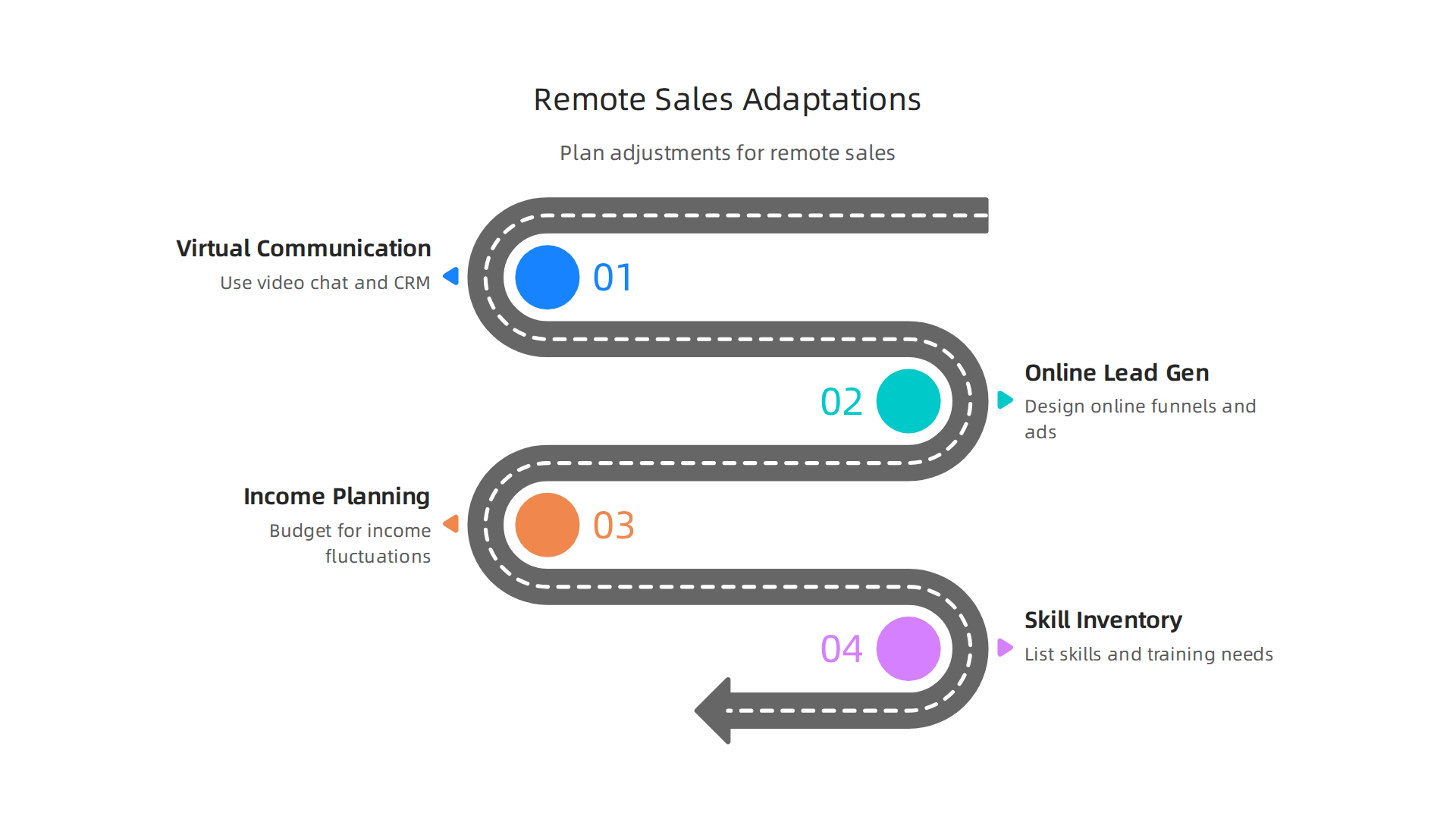
Focus on Virtual Communication and Tech Tools
In a remote role, your CRM is your desk. Your video call app is your conference room. So your plan should highlight your business proposal template skills and your ability to use tools like Salesforce, HubSpot, or ZoomInfo. Without an office, your tech stack is your workplace. Be specific about which tools you use and how you stay productive.
Design a Lead Generation Section for Online Channels
Forget walking into a storefront. Your leads come from LinkedIn, email sequences, webinars, and social selling. Your business plan needs a clear strategy for each channel. List your target numbers. For example, "I will host two webinars per month to generate 20 warm leads." This is not a guess. It is your roadmap. The Upwork beginner’s guide suggests including step-by-step actions for each channel.
Plan for Income Fluctuations
Freelance and commission based income goes up and down. That is normal. But your plan should address it head on. Build in a savings buffer equal to three months of average expenses. Also, list multiple income streams, like base salary from one client and residual commissions from another. This is not just about money. It is about peace of mind.
Add a Skill Inventory Section
Traditional business plan examples talk about company structure. Yours should talk about you. List your top skills: virtual presentation, CRM proficiency, time zone management, and negotiation. If you want to grow, include a plan for learning. Check out this article on mastering AI digital marketing for online sales jobs to see how new tech skills can fit into your structure.
The best part? You do not have to start from scratch. Grab a free business plan outline from the SBA sample plans page and start tweaking each section to match your remote life. Make it personal. Make it useful. Make it yours.
Market Validation: Researching Your Niche and Target Audience
Once you have tailored your outline, the next step is to make sure your plan leads to actual sales. You do not want to spend weeks building a pipeline only to find out nobody wants what you are selling. That is where market validation comes in. It helps you confirm there is real demand for your offer before you invest time and money.

Identify High-Demand Niches
Start by looking at areas where online sales are booming right now. In 2026, some of the hottest niches include SaaS, e-commerce, and financial services. Use industry reports from sites like Gartner or Statista to spot trends. For example, you might see that small businesses are spending more on project management software. That tells you there is a hungry market for that type of sale. The key is to pick a niche where people are already buying, not one where you hope they might buy later. As the Shopify guide on market validation explains, you need to research popularity and industry trends first.
Validate Demand with Real Data
Do not just guess. Use surveys, competitor analysis, and keyword research to check if your idea has legs. Send a quick poll to your LinkedIn network asking what problems they face. Look at competitor reviews to see what customers complain about. That shows you gaps you can fill. Keyword research tools like Google Trends or Ahrefs can tell you if people are actively searching for solutions. The HBS Online post on validating your business idea suggests writing down your goals and assumptions first, then testing them one by one. That keeps you honest.
Build a Target Customer Persona
Now, create a detailed picture of your ideal buyer. For remote sales, this persona looks different than in a traditional office setting. Think about their daily routine. Do they work from home? Do they check email at 6 AM or 10 PM? What tools do they use? What keeps them up at night? A good persona includes their job title, income level, biggest pain point, and where they hang out online. This step helps you speak directly to their needs. To dive deeper into this, check out our guide on STP marketing for online sales success. It walks you through segmentation, targeting, and positioning for remote buyers.
Market validation is not a one-time task. It is an ongoing habit. Every time you add a new product or service, run through this process again. It saves you from chasing dead ends and keeps your pipeline full of real opportunities.
Financial Projections and Income Realism for Commission-Based Sales
Okay, let us talk about the elephant in the room. Commission-based income can feel scary. One month you might close three big deals. The next month, you might close none. This is why your business plan outline needs a strong financial reality check.
You validated your market in the previous step. Now, use that data to build a financial forecast that keeps you grounded, not overly optimistic.
Project Realistic Income with Conservative Math
Look at the numbers from your market research. You found an average deal size, right? And a typical conversion rate from the sales funnels you studied? Now, cut those numbers in half. This gives you a safe starting point.
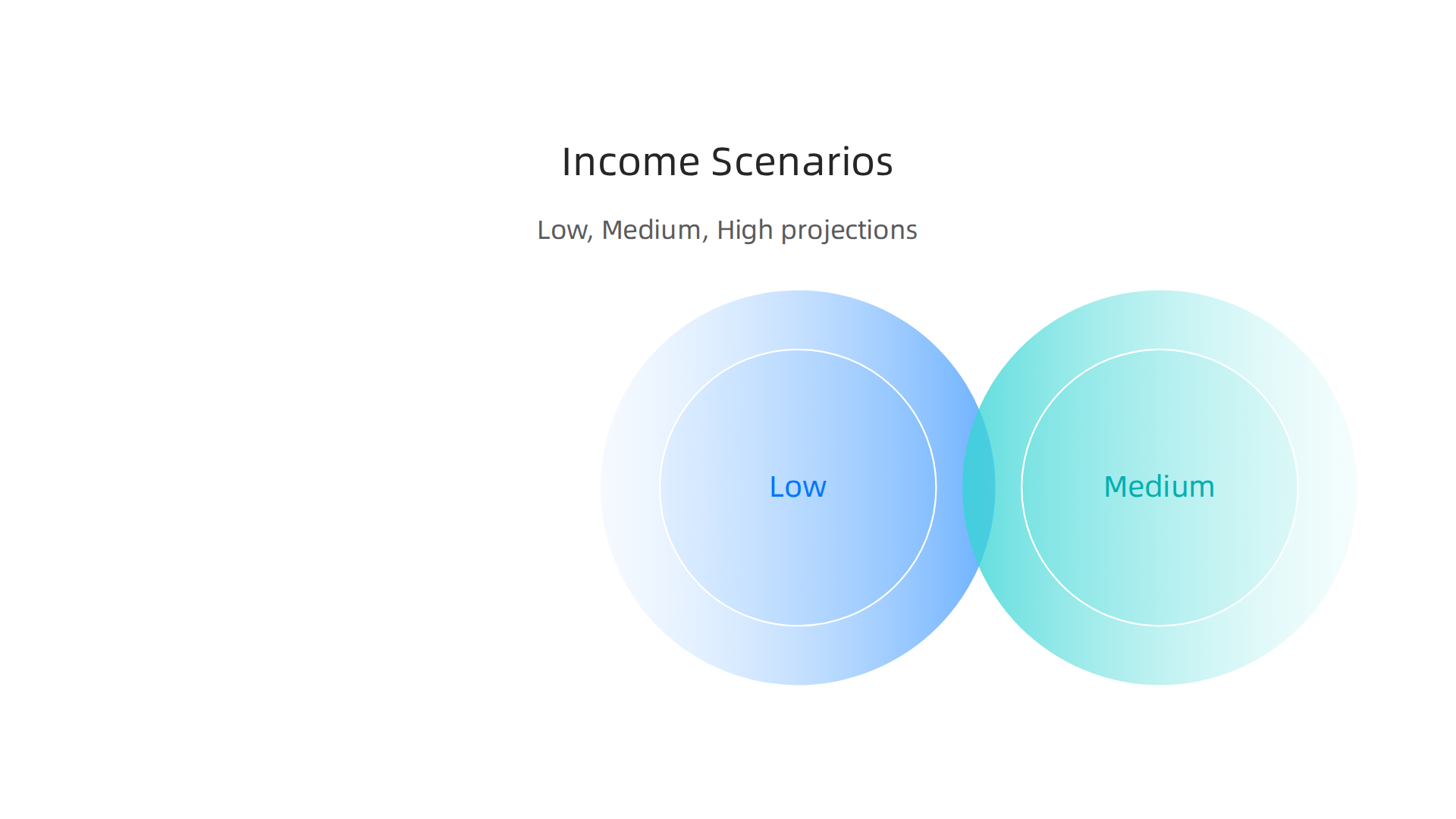
Create three simple scenarios: low, medium, and high. For a solid business plan, the medium scenario should rely on conservative conversion rates.
The HBS Online guide on validating business ideas reminds us to write down our assumptions and test them. Do not assume you will close 50% of leads in month one. Assume 5%. Build your business plan outline around that low number first.
Include a Break-Even Analysis and 12-Month Cash Flow
A good business proposal template forces you to think about money going out versus money coming in. In 2026, your costs might include a CRM, a LinkedIn Sales Navigator subscription, and internet costs. List every single cost.
Your break-even analysis answers one simple question: "How many deals do I need to close each month just to cover my bills?" Map this out over 12 months. If you are new to structuring this, our guide on mastering your business proposal template can walk you through the exact layout. Seeing the numbers on paper makes the income uncertainty feel much more manageable.
Address Income Uncertainty with a Contingency Plan
Here is the thing. Even with the best plan, commission checks can be late. You need a safety net. A contingency plan is a must-have part of any commission-based business plan.
Your plan could include a part-time retainer role. Many companies need sales assistants for a few hours a week. You could also offer consulting services tied to your niche knowledge. The goal is to cover your basic expenses while you build your pipeline. Check out our list of legitimate remote sales jobs to find stable part-time options that still keep you in the sales game. Or, consider mastering a flexible skill like AI digital marketing to generate short-term client work. This backup income gives you the staying power to succeed in high-ticket sales.
Do not skip this step. A realistic business plan outline does not just dream about the big payday. It plans for the slow months too. That is what separates a career from a temporary gig.
Common Pitfalls to Avoid in Your Online Sales Business Plan
You have your numbers mapped out. You know how many deals you need to close. But even the best plan can fall apart if you step on the same landmines that trip up most beginners.

Here are the big ones to watch for.
Overly Optimistic Income Projections
This is the most common mistake. You get excited and assume every month will be your best month. But sales have slow seasons. Lead conversion timelines can stretch for weeks. The LivePlan guide on business plan mistakes says many entrepreneurs fail because they skip the planning process altogether or write for the wrong audience. Do not be that person. Base your numbers on conservative math, not your best-case daydream. The business plan outline you build must survive a bad month.
Skipping Market Validation
You might assume demand exists because you see others making money. That is a trap. You need hard evidence. The Growth Grid guide on avoiding common business plan mistakes in 2026 reminds us that fatal flaws often come from unrealistic financials and untested assumptions. Before you commit to a niche, talk to real buyers. Use the STP in marketing framework to segment your audience and validate the need. Otherwise, you are building a strategy on guesswork.
Failing to Plan for Ongoing Skill Development
Your business plan cannot stop at income goals. You also need to plan how you will grow your skills. In 2026, tools like CRM platforms and virtual closing techniques change fast. If you ignore this, your pipeline dries up. The Maryland WBC guide on common mistakes points out that skipping steps and not using resources is a fast track to failure. Make space in your plan for training. Our guide on mastering AI digital marketing shows exactly how to build these skills while you build your pipeline.
Avoid these pitfalls, and your business plan outline will actually work for you. Ignore them, and you will waste months starting over.
Tools and Resources for Crafting Your Sales Business Plan
You know the common mistakes. You know how to dodge them. Now you need the right tools to actually build your plan without starting from scratch. Here is what I recommend for 2026.
Start With a Solid Template
Free templates are a lifesaver. Organizations like SCORE and platforms like LivePlan offer structured outlines that guide you through every section. The LivePlan guide on business plan mistakes shows that skipping steps is a common failure point. Using a template helps you stay consistent and complete. Even a simple Google Docs outline works wonders to get your ideas down fast. It gives you a clear business plan outline you can fill in piece by piece.
Connect Your CRM for Real Numbers
Your business plan needs solid data to back up your projections. If you are already selling or testing a product, connect your CRM. Tools like HubSpot or Salesforce can pull real numbers on your early customer acquisition costs and lead conversion times.
This turns guesswork into facts. If you want to build a career using these powerful tools, check out our guide on landing high-paying online sales jobs with real estate CRM expertise.
Use Financial Calculators to Model Income
Sales income can vary a lot. You need to model different scenarios to make sure your plan holds up. Financial calculators from Paddle or Baremetrics help you visualize what happens if your commission drops or a deal falls through. This is especially important when you are building a performance-based sales career. Our guide on mastering your business proposal template can help you structure the written part of your plan, while these calculators handle the math.
Keep Your Skills Sharp
Your tools only work if you know how to use them. The best CRM in the world won’t help if your sales skills are rusty. Use the STP in marketing framework to refine your target audience. Make sure your plan includes time for training on modern tools and techniques.
With these resources, your business plan outline becomes a living document that supports your growth instead of a dusty file you never touch.
From Outline to Action: Building Your Personal Sales Roadmap
You have your business plan outline ready. You know the tools. But a plan on paper does nothing for you if you never use it. The hard part is turning that outline into daily action.
This is where many sales professionals get stuck. They plan but fail to execute. In 2026, the difference between a successful sales career and a stagnant one comes down to how well you move from strategy to action. A proven 5-step framework for turning strategy into results can help bridge that gap.
Break Your Plan Into Weekly Actions
Your business plan outline needs to become a weekly checklist. Do not think in terms of "finish the plan." Think in terms of what you do this Monday morning.
Here is how to translate each section of your plan into real tasks:
- Your prospecting section becomes "Send 15 personalized outreach messages every weekday."
- Your revenue projections become "Close at least 2 new deals this month."
- Your skill goals become "Complete one sales training module every Friday."
- Your target market analysis becomes "Research 5 new accounts in your niche each week."
A thoughtful action plan turns performance issues into opportunities for improvement. Do not overcomplicate it. Write down one or two actions for each section of your plan and schedule them into your calendar right now.
Set SMART Goals That Stick
Vague goals like "get more sales" will not help you. You need goals that are specific, measurable, achievable, relevant, and time bound. Setting SMART goals that actually work requires you to get very specific about numbers and deadlines.
Try these examples for 2026:
- Lead generation goal: Generate 50 qualified leads per month by using LinkedIn prospecting and cold email campaigns.
- Client acquisition goal: Convert 5 new clients each quarter through follow-up sequences and personalized demos.
- Skill certification goal: Earn a CRM certification by June 30 by completing 2 training modules per week.
The best sales goals examples come from breaking big targets into smaller, trackable steps. If you hit a wall, adjust the number but keep the habit alive.
Review and Update Every Quarter
Your business plan outline is not a one-time document. Markets shift. Your skills grow. What worked in January may not work in July.
Set a recurring review on your calendar for the end of every quarter. During this review, ask yourself three questions:
- Are my weekly actions still leading toward my quarterly goals?
- Do my SMART goals need to be adjusted based on real results?
- What new skills or tools should I add for the next quarter?
Using OKR templates can help you structure these reviews and keep your objectives aligned with your results. As you refine your personal roadmap, you may also want to explore how a longer-term career path fits into your plans. The definitive roadmap to becoming a sales director shows you what that journey looks like if you decide to aim higher.
Your business plan outline becomes valuable only when you act on it. Start with one small task today. Then do it again tomorrow. That is how you build a real sales career.
Summary
This article shows online sales professionals how to build a practical, personalized business plan outline that turns scattered activity into steady income. It explains why a written plan matters for remote and commission-based roles, breaks down the essential sections you need (executive summary, market analysis, services, sales strategy, financials, and appendix), and shows how to adapt each section for virtual selling and freelance work. You’ll learn simple validation methods to confirm demand, how to create realistic financial projections with break-even and contingency plans, and which tools and templates speed the process. The guide also highlights common pitfalls—like overly optimistic forecasts and skipping validation—and gives a 5-step approach to turn your plan into weekly actions and SMART goals. By the end you’ll be able to draft a one-page plan, model conservative income scenarios, and set repeatable habits that keep your pipeline and skills growing.