

Social Media Marketing Content Strategy for Online Sales in 2026
Overview
Introduction
Have you ever spent hours posting on social media, only to feel like nobody saw it? You are not alone.

Many people in remote sales jump from platform to platform without a real plan. They post randomly, hope for the best, and wonder why their hard work does not turn into sales.
This approach wastes time and drains energy.
Here is the thing. A strong social media marketing content strategy changes everything. Instead of guessing, you follow a clear path that turns your social platforms into predictable sales machines. Research backs this up. A 2026 report from Meltwater shows that businesses with a data-backed social media plan outperform those without one. The study found that digital practices have a direct, positive effect on sales performance and long-term business growth.
This guide gives you a research-backed framework made for remote sales careers. Whether you are building a social media content marketing plan for a small business or fine-tuning your Instagram marketing strategy, the steps here apply to you. You will learn how to stop scattering your efforts and start building a system that works for you.
We will cover everything from choosing the right platforms to creating posts that actually convert. No fluff. Just practical steps you can use right away. If you want to take your skills even further, check out our guide on how to master AI digital marketing for online sales jobs in 2026.
Ready to turn your social media into a sales tool that works while you sleep? Let us get started.
Why a Social Media Marketing Content Strategy Is Non-Negotiable for Online Sales in 2026
The days of sending cold messages to strangers and hoping they buy are ending fast. In 2026, buyers expect you to prove your value long before you ask for the sale. According to a global consumer trends report from Capgemini, customers are now more selective than ever. They want personalized value. They want trust. And they want to see real proof before they engage.
If your approach is still spray and pray, you are falling behind. This is why a well-planned social media marketing content strategy is no longer optional. It is the only way to earn attention and build relationships that lead to actual sales.
Here is what the data says.
Sales professionals who have a clear, documented plan outperform their peers by a staggering two to three times. Research published in the Journal of International Education and Research shows that digital practices, when applied correctly, directly boost sales performance and long-term business strength. A structured plan helps you focus your efforts on the platforms where your buyers actually spend time. You stop guessing and start building.
The 2026 Global State of Social Media report from Meltwater backs this up. It found that companies with a data-backed social media plan are much more likely to hit their sales targets. Having a strategy does not just mean posting five times a week. It means knowing exactly who you are talking to, what they need, and how to give it to them.
Platforms have changed too.
The algorithms on major platforms like Instagram, TikTok, and LinkedIn no longer reward posting a lot of content just for the sake of it. In 2026, these algorithms favor consistent, high-relevance content that people actually engage with. The Social-First Trends 2026 report highlights that discovery now happens through relevance, not frequency. A few well-crafted posts that solve a real problem will always beat dozens of irrelevant updates.
This is where the power of a real social media marketing content strategy comes in. It helps you plan content that your audience finds helpful, educational, or entertaining. You build trust over time. And when you make a sales offer, it feels like a natural next step, not a cold pitch.
What does this mean for your remote sales career?
It means you need to stop treating social media like a side task. It should be the core of your sales process. Start by mapping out your audience’s biggest challenges. Then create content that directly addresses those challenges. When you do this, you turn your social profiles into an asset that attracts buyers to you.
For a deeper look at how to structure your sales approach, check out our guide on STP marketing for online sales success. It walks you through segmenting your audience and positioning your personal brand to stand out.
A strategy is not just a nice bonus in 2026. It is the foundation for turning your social media activity into a reliable source of income. Skip the strategy, and you are just shouting into the void. Build one, and you start working smarter, not harder.
Defining Your Ideal Customer Profile and Sales Goals for Social Content
So you know you need a social media marketing content strategy. But where do you actually start? Most people jump straight to posting. They pick a platform, write a caption, and hit publish. Then they wonder why nobody buys.
The problem is not your creativity. It is your aim.
Before you create a single post, you need to know two things with crystal clarity: who you are talking to and what you want them to do.

This is the step that separates a scattered social media content marketing plan from a focused sales engine.
Start with your Ideal Customer Profile (ICP).
An ICP is a detailed description of the person who is most likely to buy from you. Think about their job, their income, their biggest frustration, and what keeps them up at night. The more specific you get, the better your content will perform.
According to the Sprout Social guide on social media strategy, every solid strategy starts with understanding who your audience is. When you know your ICP, you stop wasting time on content that attracts tire kickers. You create posts that speak directly to the people who actually need your solution.
For example, if you sell a CRM tool for remote sales teams, your ICP might be a sales manager at a 50-person company who is tired of spreadsheets. Every post you make should solve one of their specific problems. No filler.
Now set SMART goals for your social content.
SMART stands for Specific, Measurable, Achievable, Relevant, and Time-bound.
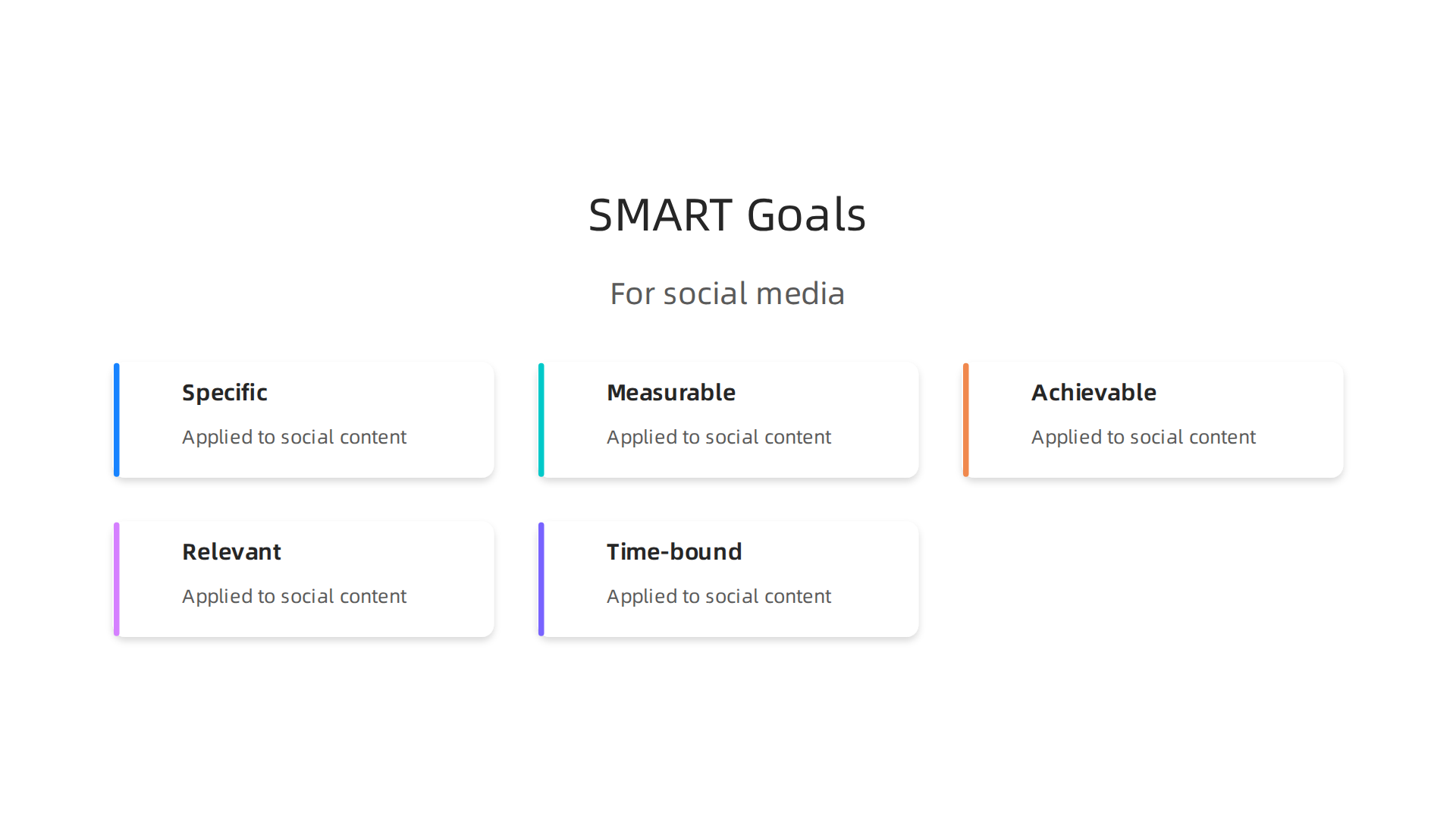
Without these, your social media marketing strategy is just a wish list.
The Hootsuite social media strategy guide says goal setting is step one. So instead of saying "I want more leads," say "I want 10 qualified leads from LinkedIn this month by posting three educational videos per week." That is a goal you can measure. That is a goal that connects directly to your sales pipeline.
Segment your audience for different buyer stages.
Not everyone who follows you is ready to buy right now. Some are just learning about their problem. Others are comparing solutions. A few are ready to sign.
Your social media content marketing should reflect these stages. Map out three buckets:
- Awareness stage: Share educational posts that help people understand their problem.
- Consideration stage: Compare solutions, share case studies, and address objections.
- Decision stage: Offer demos, free consultations, or limited-time incentives.
When you segment, your instagram marketing strategy or linkedin plan feels personal. And personal content converts.
For a full blueprint on structuring your sales approach around your customer, read our guide on building a business plan outline for online sales professionals. It walks you through setting goals and defining your target market from the ground up.
Remember, a clear ICP and smart goals are the foundation of any social media marketing strategy that actually brings in money. Get these right, and every post you make will work harder for you.
Core Components of a Social Media Marketing Content Strategy for Online Sales
Now that you have a clear picture of your ideal customer and your SMART goals, it is time to build the engine that will drive real results. Your social media marketing content strategy needs three core components to turn followers into buyers. Without these, your content will feel random and your sales will stay flat.
1. Content pillars that build trust and authority
Content pillars are the three main themes you post about again and again. They keep your brand consistent and show your audience that you are an expert. For online sales, the most effective pillars are:
- Education: Teach your audience something useful. How to use a CRM. How to handle a cold call. How to qualify a lead faster. HubSpot’s 2026 social media strategy guide shows that educational content builds authority and keeps people coming back

[blog.hubspot.com/marketing/social-media-strategy-for-your-business].
- Social proof: Share case studies, testimonials, and before-and-after numbers. When prospects see that others have succeeded with your product or service, they trust you more. This pillar reduces the risk they feel.
- Personality: Let your real team or your own voice shine. Behind-the-scenes posts, bloopers, or personal stories make your brand human. People buy from people, not logos.
Mix these three pillars in a 70-20-10 split: 70% education, 20% social proof, 10% personality.
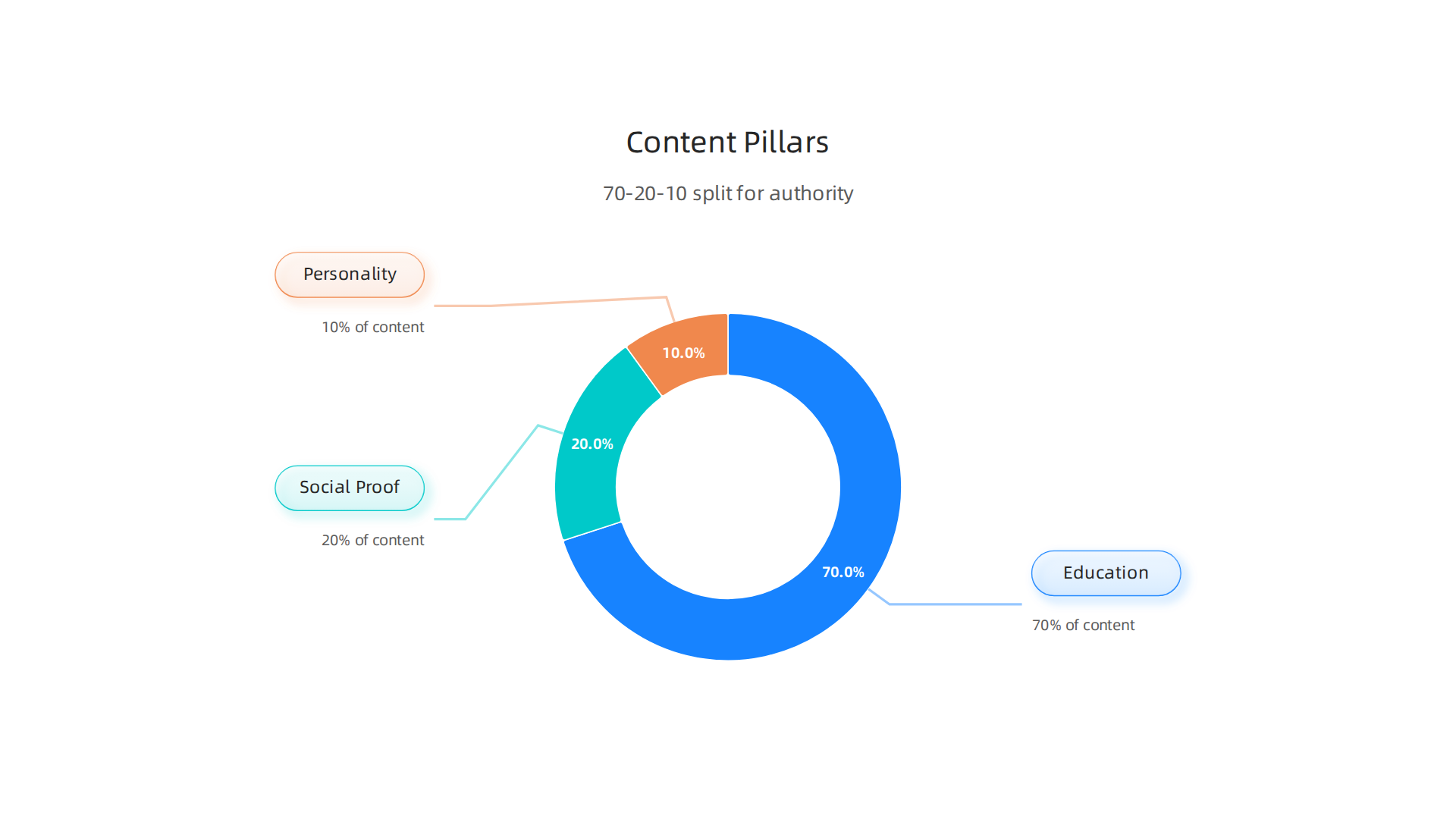
That balance keeps you both helpful and credible.
2. Channel selection based on where decision makers hang out
Do not post everywhere. That is a waste of time and energy. Instead, pick the one or two channels where your ideal customer already scrolls.
- If you sell to business owners and executives, LinkedIn is your home. The platform fuels B2B relationships and in 2026 remains the top channel for professional decision makers.
- If your product is visual, like real estate or fashion, Instagram and TikTok win. TikTok currently has the highest user-to-buyer conversion rate of any platform at 45.5% [meta-phoenix.io/articles/trending-social-media-ad-formats.html].
- If you offer complex services that need explanation, YouTube Shorts and long-form videos work.
The key is to match your platform to your audience’s habits. Use the data from your ICP to decide. Your small business social media marketing efforts should focus on quality over quantity.
3. A content calendar that aligns with sales campaigns
Posting on a whim kills momentum. A content calendar forces you to plan ahead and makes sure every post supports a current sales push.
- Map out your calendar month by month.
- Tie each week’s content to a specific sales campaign or promotion.
- Leave room for timely posts, but keep the structure solid.
According to EvergreenFeed’s guide, a solid content calendar turns your social content from reactive to strategic [www.evergreenfeed.com/blog/social-content-strategy/]. When you plan, you stop scrambling for ideas and start delivering the right message at the right time.
For a deeper look at how segmentation builds better targeting, check out our guide on STP in marketing for online sales success. It shows exactly how to split your audience into groups that respond to different content.
Combine these three components with your ICP and goals from the previous section, and you will have a social media marketing content strategy that actually moves the needle. No more guessing. Just consistent, intentional posts that build authority, reach the right people, and support your sales machine.
Creating High-Converting Content: From Awareness to Closing the Deal
You have your content pillars, your channels, and your calendar. Now comes the real work. You need to create content that actually moves people from "who are you?" to "I’ll take it." That is the heart of any good social media marketing content strategy.
The trick is to match your content to where your prospect is in their buying journey. Different stages need different types of messages.
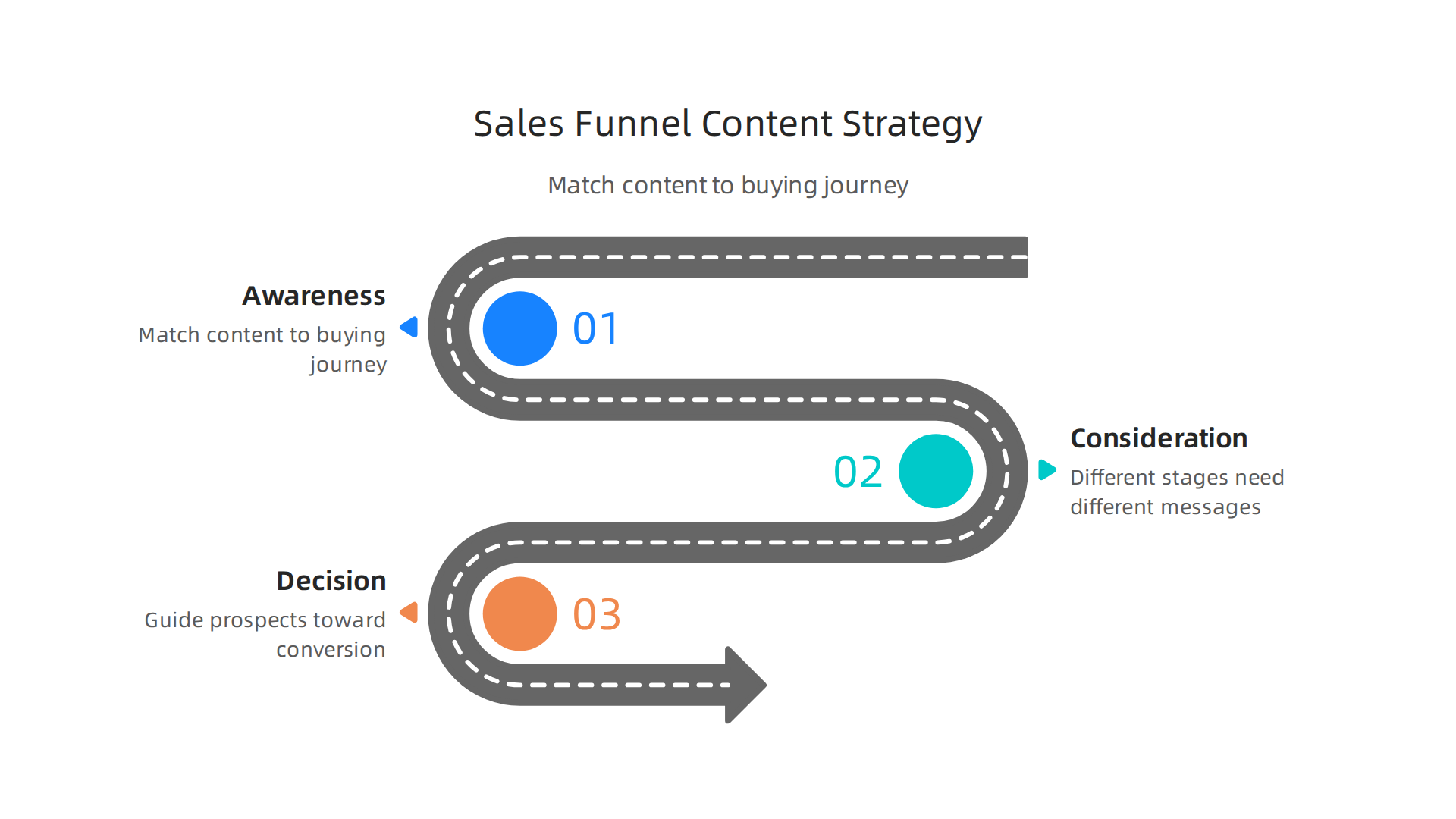
Top-funnel content: Build authority first
At the top of the funnel, your audience does not know you yet. They have a problem, but they are just starting to look for answers. Your job here is to educate, not sell.
Post content that answers their biggest questions. Think how-to videos, quick tips, and industry insights. Short-form video is king here. According to Buffer’s analysis of over 45 million posts in 2026, video content on TikTok earns a median engagement rate of 3.39%.

That is 77% higher than carousels or photos [buffer.com/resources/data-best-content-format-social-media/]. People watch, learn, and start to trust you.
For your small business social media marketing efforts, this top-funnel content is the doorway. If you teach them something useful for free, they will come back when they are ready to buy.
Middle-funnel content: Show you solve their specific problem
Once they know you exist, they start comparing options. Now your social media content marketing needs to show how you fix their exact pain points.
This is where storytelling and relatable objections shine. Instead of just listing features, tell a story about a customer who had the same objection they have. "I thought it would be too expensive." "I tried a similar tool before and it did not work." Walk them through how the objection was overcome. It reduces their resistance because they see themselves in the story.
Use detailed examples that show your solution in action. Explain how a specific feature saves time or money. Make it concrete. The Teknon Group notes that while short-form video drives growth, long-form authority content has made a strong return in 2026 [www.teknon.io/blog/social-media-content-strategy-2026]. Use both formats here to build deeper trust.
Bottom-funnel content: Close the deal with clear next steps
At the bottom of the funnel, they are ready. Do not leave them guessing. Every post should have a crystal clear call to action.
Use offers that are clickable and specific. Download a pricing guide. Book a free consultation. Get a limited-time discount. The offer itself should remove the last bit of hesitation. If you can, tie it to a specific campaign from your content calendar.
For example, if you sell a real estate CRM, your bottom-funnel video could end with "See how our CRM helped agents close 30% more deals last quarter. Click the link to try it free for 14 days." That is simple, direct, and low risk.
To build a complete plan that covers every stage, learn how to map your entire sales journey by reading our guide on mastering AI digital marketing for online sales jobs in 2026. It shows you how technology can support each step from awareness to closing.
When you build content for each stage of the funnel, you stop hoping for sales and start creating a predictable path that leads straight to the deal.
Measuring and Optimizing Your Social Media Content for Sales ROI
You just created content for every stage of the funnel. But how do you know if it is actually working? Here is the hard truth. Getting a thousand likes on a post feels great. But if those likes never turn into customers, you are just collecting digital high fives.
In 2026, smart businesses stopped chasing vanity metrics. They started measuring what actually pays the bills. Your social media marketing content strategy needs a measurement system that connects social posts to real revenue.
Stop watching the wrong numbers
Likes, views, and shares do not put food on the table. They are interesting, but they do not tell you if someone bought your product. According to Sprout Social, the metrics that matter in 2026 are conversion rate, customer acquisition cost, and customer lifetime value [sproutsocial.com/insights/social-media-metrics/]. These numbers show you if your content is actually driving sales.
If your conversion rate from social is low, you are probably making content that entertains but does not sell. That is fine for top of funnel. But your bottom funnel posts need to convert. Shift your focus from "how many people saw this" to "how many people took action."
Connect your content to real deals with a CRM
Here is the biggest upgrade you can make. Connect your social media accounts to your customer relationship management (CRM) system. When a prospect clicks a link in your bio or fills out a form from a post, the CRM tracks that person from first touch to final sale.
This is called attribution. You can see exactly which post, which channel, and which campaign led to a closed deal. A comprehensive guide to content marketing ROI analytics explains that without this connection, you are guessing which content actually drives revenue [www.heeet.io/blog/content-marketing-analytics-the-complete-guide-to-measure-and-show-content-roi-in-2026]. With it, you can double down on what works and cut what does not.
For example, if your Instagram Stories are driving five times more demo requests than your LinkedIn posts, you know exactly where to put your effort. No more spreading yourself thin across every platform.
Test your way to twice the conversions
The best way to improve your sales ROI is to never stop testing. Change one thing at a time. Try a different headline. Swap out a photo for a short video. Post at 9am instead of 2pm. Run the test for a week, then compare the results.
Sociali.ai highlights that the most important social media KPIs to track in 2026 include conversion rate and engagement rate [sociali.ai/blog/how-to-effectively-measure-social-media-success-5-kpis-to-track-in-2026]. But you can improve these numbers by A/B testing. Over time, small improvements add up. A 10% better conversion rate combined with a 10% better click-through rate can double your sales from the same amount of content.
Keep a simple spreadsheet. Write down your test, the control result, and the test result. Let the data decide what to post next.
Build a measurement habit
You do not need a huge dashboard to start. Just pick three metrics that matter to your bottom line. Conversion rate. Cost per lead. Deals closed from social. Check them weekly. Adjust your content based on what the numbers tell you.

To plan your entire sales approach, including how to set up the right tracking systems, check out our guide on STP in marketing your strategy for online sales success. It helps you segment your audience so you can measure what each group responds to best.
When you measure the right things, your social media stops being a cost center and becomes a reliable sales engine. Stop guessing. Start optimizing. Your bottom line will thank you.
Building Trust and Authority: E‑E‑A‑T and Personal Branding in Online Sales
You have the numbers. You know which posts drive clicks and which ones bring in leads. But here is the missing piece. People buy from people they trust. In 2026, your social media marketing content strategy needs more than good data. It needs a personal brand that feels real and credible.
Google uses something called E‑E‑A‑T. It stands for Experience, Expertise, Authoritativeness, and Trustworthiness. These signals help Google decide which content is reliable. The same signals work on social media. When a prospect sees your content, they instinctively ask: does this person know what they are talking about? Can I trust them?
Consistency is your shortcut to credibility
If you post about sales tips one day and cat memes the next, your audience gets confused. Consistency in voice, topic, and posting schedule tells people you are serious. According to the SUCCESS guide on personal branding, showing up consistently with valuable content is what separates casual posters from trusted experts
[www.success.com/how-to-build-a-personal-brand-that-grows-your-business-in-2026-2].
Pick one core topic that matches what you sell. If you are in B2B sales, talk about closing techniques and lead generation. If you sell coaching, share client wins and lessons learned. Stick to that lane. Over time, your audience will see you as the go-to person for that subject.
Social proof makes skeptics become buyers
Nobody wants to be the first to try something risky. That is why social proof works so well. When you show that other people have used your product and gotten results, it lowers the perceived risk for new buyers.
Share real examples. Post a short case study with numbers. Show a screenshot of a happy customer message. Harvard Business School Online points out that social proof is one of the most powerful ways to build a personal brand because it provides evidence that you deliver value [online.hbs.edu/blog/post/social-media-for-personal-branding].
Do not oversell. Just tell the story. When your audience sees real outcomes, they trust you more.
Thought leadership converts faster than generic advice
Anyone can post "5 tips for better sales." But only someone with real experience can share a specific story about how they turned a difficult negotiation into a signed deal. That is thought leadership. It shows depth. It shows you have been in the trenches.
Matthew J. Sid’s guide on personal branding explains that in 2026, the most effective personal brands share both their wins and their failures [www.heysid.com/resources/personal-branding-in-2026-a-complete-b2b-guide]. This is what builds Experience in the E‑E‑A‑T framework. When you open up about a mistake you made and what you learned, people trust you more than if you only post perfect success stories.
Behind-the-scenes content beats polished perfection
Show the messy middle. Record a quick video of yourself preparing for a sales call. Share a photo of your workspace. Talk about a problem you are trying to solve for a client right now. This type of real-time content builds connection faster than a heavily edited post.
The Kedraco guide on building a personal brand recommends using behind-the-scenes content to humanize yourself and demonstrate your work ethic [www.kedraco.com/blogs/building-personal-brand]. People want to buy from someone they feel they know. Let them see the real you.
Wrap your personal brand around your sales goals
Your personal brand is not separate from your business. It is the front door. When you combine consistency, social proof, thought leadership, and real experiences, you create a presence that converts skeptical buyers into loyal customers.
To build a complete business plan around your personal brand and sales goals, use this business plan outline for online sales professionals. It helps you structure how your personal brand supports your revenue targets.
Start small. Pick one platform. Share one real story this week. Watch how trust grows. That trust is what turns social media activity into actual sales.
Summary
This guide shows remote sales professionals how to turn social media from a time-sink into a predictable sales engine by using a research-backed content strategy. It walks you through the essentials: defining a precise ideal customer profile (ICP), setting SMART goals, choosing the right channels, and creating content pillars (education, social proof, personality) that map to awareness, consideration, and decision stages. The article explains practical tactics—how to build a content calendar tied to campaigns, use CRM attribution to connect posts to real deals, and run simple A/B tests to improve conversion rates. It also covers trust-building through E‑E‑A‑T and personal branding so prospects move from curiosity to purchase. By following the framework here you’ll stop guessing, focus on the posts that matter, and measure what actually drives revenue.