

How to Land a Real Sales Development Representative Remote Job in 2026 Without Getting Scammed
Overview
Introduction
Are you tired of scrolling through endless job boards, hoping to find a solid sales development representative remote role that isn’t a total scam? You are not alone.

The remote work world is booming in 2026. According to the latest data from FlexJobs, remote job postings jumped 20% over Q4 of last year. A lot of that growth is in sales roles. Companies are hiring SDRs who can prospect from home, build pipelines, and set meetings without ever stepping into an office.
But here is the thing. The same surge that creates opportunity also creates clutter. For every real remote sales job, there are dozens of vague listings, lowball offers, and outright scams. If you have ever applied to something that looked like a dream only to find a pyramid scheme, you know exactly what I mean.
This guide cuts through the noise. We will show you how to find legitimate positions, avoid the traps, and actually land a role that pays well and lets you work from anywhere. We will also touch on related roles like business analyst remote jobs, virtual assistant jobs, and even 1099 work from home jobs if you want to explore other paths. If you are looking for entry level remote part time jobs, we have tips for that too.
Ready to stop guessing and start winning? Read our guides to learn how to spot real opportunities and skip the scams.
The Remote SDR Boom: Why 2026 Is the Year to Go Remote
If you have been looking for a sales development representative remote role, you picked a great time. The remote work shift is not a temporary trend. It is permanent, especially in B2B sales. Companies now see that great SDRs can prospect and close meetings from anywhere.

The numbers back this up. Remote job postings in sales jumped 20% over Q4 2025, according to FlexJobs. And the demand for SDRs keeps climbing. The Bureau of Labor Statistics projects steady growth for these roles through 2028, with over 63,000 new SDR jobs expected (via Zippia). That is a lot of opportunity if you know where to look.
Remote SDRs often outperform office-based reps
Here is the thing many people miss. Working from home does not hurt sales performance. In fact, it often helps. Studies from WorkTime show that remote workers stay focused longer and deliver higher output. For SDRs, that means more calls, more emails, and more quality leads passed to account executives.
Managers have noticed. According to AccountMakers, remote sales roles are growing fastest in tech and SaaS. Companies are hiring SDRs who can work from anywhere and still hit quota. That is great news for you.
Of course, SDR is not the only path. You might also be curious about business analyst remote jobs, virtual assistant jobs, or 1099 work from home jobs. Those are all solid options. But if you want a clear career ladder with high earning potential, SDR is one of the best entry points. Many SDRs move up to account executive roles in 12 to 18 months (check out monday.com for career path details). And if you are looking for entry level remote part time jobs, plenty of companies offer part-time SDR positions that can become full-time.
Employers are competing for top talent
Because remote SDRs are so valuable, companies are fighting to attract and keep them. In 2026, that means better pay, more flexibility, and richer commission packages. The old model of low base + high commission is shifting. Employers now offer bigger upfront salaries plus performance bonuses, all while letting you work from your home office.
The trend is clear. Remote work is here to stay, and SDR roles are leading the charge. The only question is whether you will grab the opportunity.
Ready to find your next remote SDR role? Read our guides to learn how to spot real jobs and skip the scams.
Must-Have Skills for Today’s Remote SDR
So what does it take to land a sales development representative remote role in 2026? The demand is there, but you need the right mix of abilities to stand out. Employers are not just looking for someone who can make phone calls. They want a complete package.
Let me break down the three skill categories that will make you an unbeatable candidate.

Technical skills are non-negotiable
First, you must master the tools of the trade. CRM platforms like Salesforce or HubSpot are central to every SDR role.

You also need comfort with sales engagement platforms such as Outreach or SalesLoft. And LinkedIn Sales Navigator? That is a must for finding and researching prospects.
According to Apollo, technical literacy and platform proficiency are now essential for SDR success in 2026. Employers expect you to hit the ground running. If you have not used these tools yet, start learning them today.
For example, knowing how to build targeted prospect lists in Sales Navigator can double your outreach quality. The RemoteRocketship analysis of job postings confirms that CRM and outreach platform experience are among the top skills employers demand.
Soft skills separate top performers from the rest
Here is the thing about remote sales. You do not have an office buddy to hype you up. You must motivate yourself. That takes resilience and grit. The ConvergeHub guide calls out an unfaltering mindset, excellent communication, and a resilient attitude as core SDR abilities. I could not agree more.
Virtual communication is especially tricky. You cannot read body language through a screen. You need to be clear, confident, and concise in every email, call, and message. Indeed highlights that prior sales roles require a high degree of communication skills and grit. That is what hiring managers look for.
Time management is another huge piece. Without someone watching over your shoulder, you must structure your own day. The best remote SDRs block time for prospecting, follow-ups, and learning. If you struggle with focus, start building those habits now.
Adaptability to AI tools is becoming a key hiring criterion
Sales in 2026 is not what it was even two years ago. AI tools are changing everything. Smart SDRs use AI to personalize outreach at scale, research companies faster, and automate repetitive tasks.
The CourseCareers guide notes that cold outreach and qualification frameworks are still vital. But now AI tools help you execute those frameworks more efficiently. Employers love candidates who already know how to use AI for prospecting and personalization.
Think of it this way. Every other candidate can dial a phone. The person who also knows how to use AI to research a prospect’s last LinkedIn post and craft a personalized email in seconds? That person gets the job.
If you want to see where these skills can take you, check out our guide to the best job search engine sites for remote sales jobs. It will help you find roles that match your skill set.
Ready to put these skills to work? Read our guides to learn how to spot real remote SDR opportunities and skip the scams.
How to Spot Legitimate Remote SDR Opportunities (And Avoid Scams)
Here is the hard truth about searching for a sales development representative remote role in 2026. Scammers are getting smarter. AI helps them create fake job postings, fake company websites, and even fake video interviews that look real. According to defend-id, AI job scams hit record losses in 2025 and are getting worse. But you can protect yourself. You just need to know what to look for.

Red flags that scream "run away"
Watch for these warning signs in any job posting:
- Upfront payments. Legitimate employers never ask you to pay for training, software, or a background check. The FTC Consumer Advice is clear on this. Do not pay for the promise of a job.
- Vague job descriptions. If the post does not mention specific responsibilities, tools, or a sales quota, be suspicious. FlexJobs lists vague descriptions as a top red flag.
- Too-good-to-be-true promises. Huge salaries for entry level remote part time jobs with no experience needed? That is a classic scam tactic.
- Urgency and pressure. Scammers want you to act fast so you do not think. The We Work Remotely alert says a sense of urgency is a major warning sign.
- No company online presence. A real company has a website, LinkedIn page, and employees you can find.
Green flags that signal a real opportunity
Now look for these signs that a company is legitimate:
- Transparent compensation. The posting clearly states base salary, commission structure, and any bonuses. No secrets.
- Clear training and onboarding. Good companies invest in you. They describe their training program in the job post or during the interview.
- Active team on LinkedIn. Current employees have profiles with job titles, experience, and connections. You can message them to ask about the role.
- Realistic expectations. They talk about challenges and growth, not just easy money.
How to verify before you apply
Do not stop at reading the job post. Take these steps to confirm a role is real:
- Search the company name plus "scam" or "review" online.
- Check third-party review sites like Glassdoor.
- Look up current employees on LinkedIn and send a polite message.
- Read the dailyremote guide for more prevention tips.
If you want to practice your verification skills, check out our 10 steps to find real online sales jobs on Indeed guide. It shows you exactly how to filter out the noise.
And if you are also looking into business analyst remote jobs or virtual assistant jobs, the same rules apply. Scammers target every remote role, not just SDR.
Your job search should feel exciting, not scary. Use these green and red flags to stay safe. When you find a role that passes the test, go for it with confidence.
Want more tips like this? Browse our guides for help finding legitimate remote sales opportunities.
Crafting a Job Search Strategy That Gets You Hired as a Remote SDR
Now that you know how to spot a real opportunity, it is time to get serious about landing one. A smart job search strategy for a sales development representative remote role in 2026 requires more than just clicking "apply."
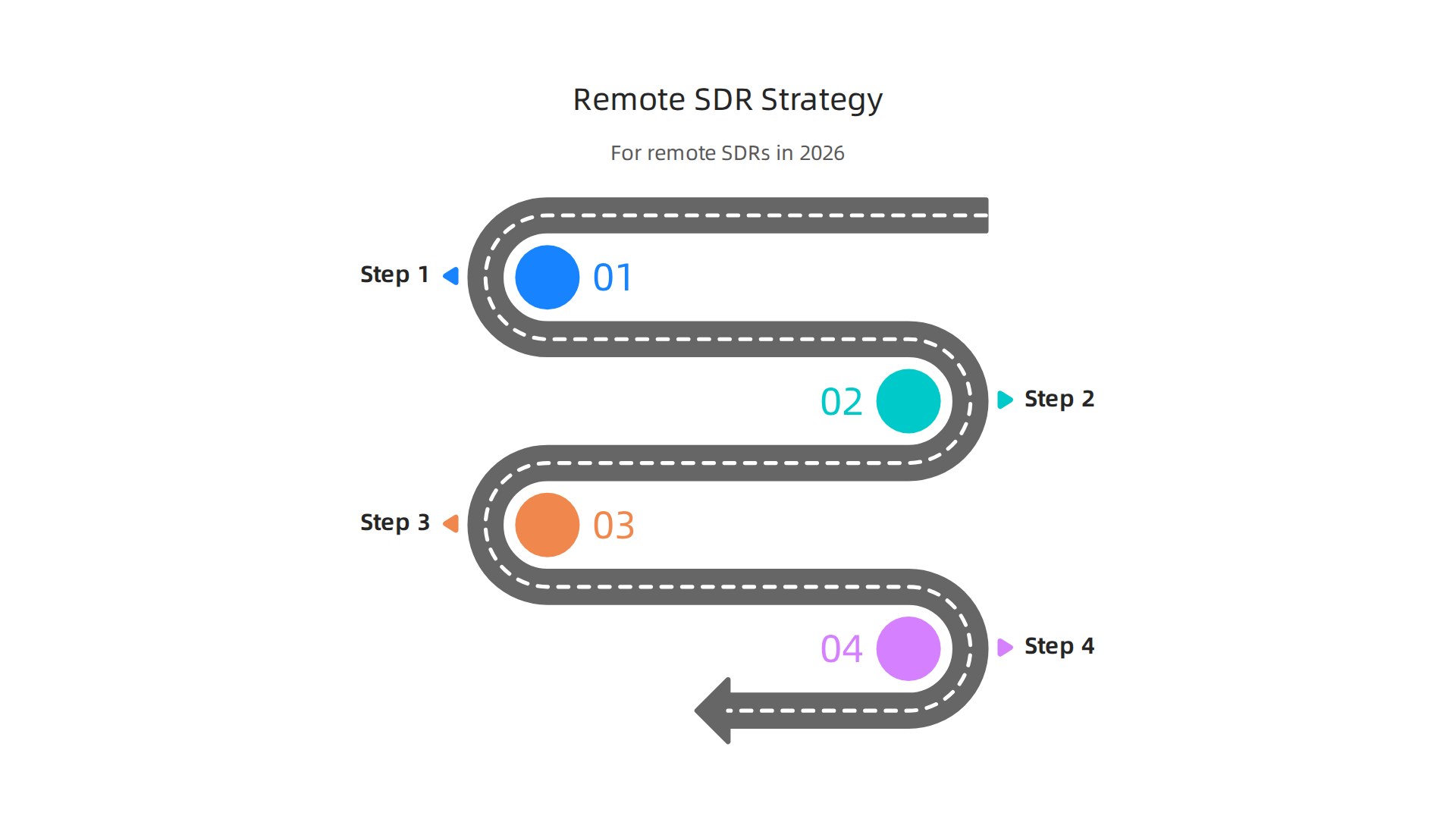
You need to prove you can sell yourself the same way you would sell a product. Here is how to do that.
Build a resume that screams "remote ready"
Your resume is your first impression. And for remote roles, it needs to show you can work without someone looking over your shoulder. According to Kuubiik, the best resumes for remote jobs highlight self-discipline, time management, and results achieved from home.
But here is the real secret. SDR resumes must be metric-heavy. CV Craft recommends including daily calls, emails sent, meetings booked, pipeline generated, and conversion rates for every role you have held. Do not just say "made cold calls." Say "made 80 cold calls daily and booked 15 qualified meetings per month."
Also, think about your skills. Group them into categories like communication tools, CRM software, and sales methodologies. This makes your resume easier to scan. The Resume Worded guide shows exactly how to organize these sections.
Show your prospecting skills before the interview
Here is a trick that works every time. Use cold outreach to contact hiring managers directly. Send a short, personalized email that shows you researched their company. Ask a smart question about their sales process or share one relevant idea.
This does two things. First, it gets you noticed. Second, it proves you already know how to prospect. As Saasiest points out, personalized and empathetic engagement beats scripts every time. If you do this well, many hiring managers will skip the application line and invite you straight to an interview.
Ace the remote-specific interview questions
Expect questions like "How do you stay motivated without supervision?" or "Tell me about a time you hit quota working from home." Your answers need to be specific. Talk about your daily routine, your home office setup, and how you track your own results.
Companies want to know you can handle the freedom of remote work. The best SDRs are judged on results and communication skills, not where they went to school. That is a huge advantage if you are looking for entry level remote part time jobs with no degree required.
Use the right tools to find opportunities
You already know that general job boards are full of noise. Instead, use specialized resources designed for remote sales roles. Check out our guide on the best job search engine sites for remote sales jobs to find platforms where real companies post real opportunities.
The same approach works whether you are targeting business analyst remote jobs, virtual assistant jobs, or 1099 work from home jobs. The strategy is the same. Customize your application, prove your skills, and be proactive.
Want to see more examples of winning resumes and cover letters? Browse our guides for templates and tips tailored to remote sales roles.
Understanding Remote SDR Compensation: Base, Commission, and Total Earnings
Now that you know how to land the interview, let’s talk about the money. Understanding how remote SDR compensation works in 2026 will help you pick the right offer and avoid jobs that waste your time. The structure is usually simple: a base salary plus uncapped commission. But the details matter a lot.
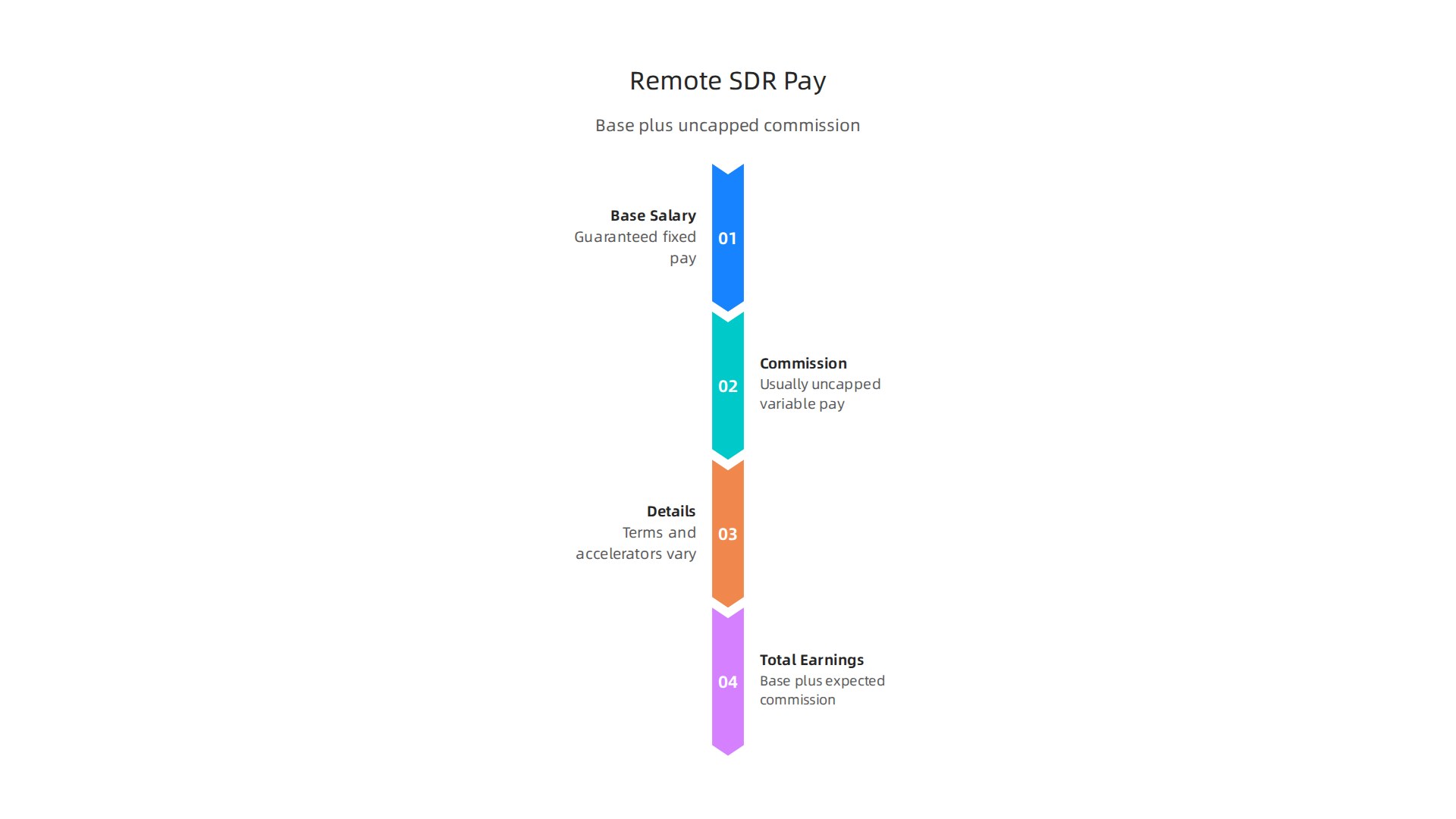
Base salary: what to expect
Most remote SDR roles offer a base salary that is slightly lower than in-office positions. Companies use this tradeoff because you save money on commuting and get more flexibility. According to the Sales Development Representative Salary Guide, remote SDR base salaries in 2026 range from $50,000 to $75,000 depending on experience and location.
But do not let a lower base scare you away. The real money comes from commission. And many companies offer competitive base pay plus strong upside. The SDR Salary Benchmarks show that mid-level SDRs with one to three years of experience earn $55,000 to $62,000 base with total on target earnings (OTE) of $82,000 to $95,000.
Commission structures: where the real earning happens
Commission is where you can outearn your base. Remote SDR roles use several different models.
Percentage of closed revenue. Some companies pay you a small percentage of every deal you help create. This works great when you sell high value software.
Per meeting bonuses. Many SaaS companies pay a flat fee for every qualified meeting you book. This is very common for sales development representative remote roles because it is easy to track.
Tiered accelerator models. These pay higher rates as you exceed your quota. For example, you might earn $100 per meeting for the first 10 meetings, then $150 per meeting for the next 10.
The SDR Salary Guide 2026 reports that OTE for remote SDRs in SaaS often reaches $85,000 to $100,000 or more. Compare that with industries where deals are smaller and commissions are lower.
Industry matters for total earnings
SaaS companies pay the highest. But you can also find good earning potential in fintech, healthcare tech, and enterprise software. If you are looking for entry level remote part time jobs in sales, the base might start around $32,000 to $40,000 with OTE around $53,000 according to Flexible Sdr Base Salary Remote Jobs.
The same principles apply whether you are pursuing business analyst remote jobs, virtual assistant jobs, or 1099 work from home jobs. Always ask about the commission structure before you accept an offer.
What to ask during negotiations
When you get an offer, ask these questions:
- What is the base salary and what is the OTE?
- How is commission calculated and when is it paid?
- Are there accelerators for exceeding quota?
- What tools and resources does the company provide?
The skills you need to succeed in these roles are the same whether you work from home or an office. Core Skills Every Sales Development Representative Needs highlights cold outreach, CRM tools, and qualification frameworks as essentials for 2026.
Want to compare salary data across different industries and locations? Browse our guides for detailed breakdowns and tips to negotiate better offers.
Mapping Your Career Path: From SDR to AE and Beyond Remotely
So you have secured your remote SDR role and understand the compensation picture. Now comes the exciting part. What comes next? The remote sales development representative remote role is one of the best launchpads in tech sales. It opens doors to careers you might not have considered yet.

The typical remote SDR career path
Most SDRs move into an Account Executive (AE) role within 12 to 24 months. SDR vs BDR vs AE: Remote Sales Roles Explained breaks down how these roles differ and why the SDR to AE jump is so common. AEs manage the full sales cycle from prospecting to closing. Your SDR experience gives you a huge head start because you already know how to qualify leads and start conversations.
But AE is not your only option. The SDR career path: moving beyond prospecting in 2026 lists other directions like Customer Success Manager (CSM), Revenue Operations (RevOps), or even Sales Team Lead. The skills you build as an SDR like CRM proficiency, cold outreach, and discovery questions transfer to all these paths.
What companies look for before promoting you
Many top SaaS companies have clear career frameworks with promotion milestones. This is especially important when you work remotely because visibility is lower. You need to be intentional.
Sales Development Representative (SDR) Career Guide: Salary and Path explains that SDRs who hit quota consistently for 6 months or more are first in line for promotion. The Remote SDR Career Path Progression guide gives a readiness checklist that includes completing an AE shadow program with at least 10 full cycle deals. These programs let you learn the closing side while still in your SDR role.
Networking and personal brand building matter more remotely
Here is the truth. When you work from home, you cannot rely on hallway conversations or casual office chats to get noticed. You have to build your reputation on purpose. Join internal sales calls even when you are not required. Share your wins in team Slack channels. Offer to help train new SDRs.
The AI Job Scams in 2026: Red Flags You Can’t Afford to Miss article warns that scammers target people looking for remote career growth. Fake recruiters may promise you a fast promotion to AE in exchange for upfront training fees. Real companies never ask you to pay for a promotion. The FTC Consumer Advice on how to avoid work from home job scams reinforces this. Never pay for a job or a career step.
Your next move starts now
The best time to plan your career path is on day one of your SDR role. Ask your manager about promotion timelines in your first week. Volunteer for stretch projects. Learn the AE side of the business by listening to closing calls.
For a deeper look at how to build a long term remote sales career, check out our guide on B2B Sales Definition and How to Build a Remote Sales Career. It covers the skills and strategies that help SDRs move up faster.
If you are ready to explore where your SDR experience can take you, browse our career guides for more tips on promotions, salary growth, and avoiding bad offers. Your next role is closer than you think.
Summary
This article is a practical guide for anyone hunting a sales development representative remote role in 2026, showing how to find legitimate openings, avoid scams, and win offers that pay well. It explains why demand for remote SDRs is growing, which technical tools and soft skills employers expect, and how AI is reshaping prospecting. You’ll learn concrete ways to vet job postings, red and green flags to watch for, and verification steps to confirm a company is real. The guide also covers how to craft a metric-driven resume, use targeted outreach to stand out, and prepare for remote-specific interviews. Compensation is broken down into base, commission models, and OTE ranges so you can evaluate offers. Finally, it maps realistic career progression from SDR to AE and other roles, with advice on visibility and promotion while working remotely.