

EJMR Marketing 2026: The Simple Method to Start Your Online Sales Career
Overview
Introduction: Navigating the Future of Online Sales
Here is a simple fact. The way we sell things online is changing fast. In 2026, the entire online sales landscape is being reshaped by new, smart strategies and deep research. This includes insights from evolving marketing discussions, sometimes called EJMR marketing 2026, which focus on data-driven decisions and modern tactics.
For anyone looking to build or switch to a career in online sales, this is both exciting and overwhelming.

On one hand, opportunity is everywhere. Research shows that about 45% of sales roles are now fully remote, especially in tech and SaaS. On the other hand, the path forward can feel foggy.
If you’re a job seeker today, you’re likely facing three big walls:
- Information Overload: It’s hard to know what advice to trust. Between endless blog posts, conflicting tips, and flashy "get rich quick" schemes, finding a legitimate career path is tough. As one analysis notes, fully remote roles have become more selective and scarce, making quality guidance even more critical.
- The Skill Gap: The tools and techniques of digital marketing and sales are always updating. You might wonder if your current skills match what a modern marketing agency or team needs, or where to even start learning.
- Uncertainty: Is this the right move? What does a realistic marketing plan look like for breaking in? With 38% of professionals already looking for a new role, you’re not alone in feeling this uncertainty.
This guide is here to clear the fog. We’ve done the work of synthesizing the latest trends and practical insights to give you a straightforward, actionable roadmap. Think of it as your reliable map for navigating an online sales career in 2026, whether you’re aiming for a remote closing role, a position in digital marketing, or even exploring a niche path like management rights sales.
Let’s cut through the noise and build a real plan for your success.
What is EJMR Marketing Research and Why Should You Care?
You have probably heard the term EJMR marketing 2026 in discussions about the future of sales and hiring. But what does it actually mean, and why is it showing up everywhere?
EJMR stands for Economic Job Market Research. In simple terms, it’s the deep analysis of labor market data, hiring trends, and economic forecasts to predict where jobs are heading. For the world of online sales, EJMR marketing research means using this data to understand everything: which sales roles companies are hiring for, what skills they want, and how much they are willing to pay.
Think of it as the playbook that top companies and recruiters are using right now to build their teams. By analyzing reports from firms like Hiring Lab, they make smarter decisions. This research shows them if the market is heating up or cooling down, where talent shortages are, and how to structure their hiring plans.
How Companies Use EJMR Data to Shape Sales Teams
So, how does this abstract research turn into the job you apply for? Here is how it works.
First, companies look at the big picture. A February 2026 labor market update might show a slight cooling, with employers becoming more selective. This tells a marketing agency to focus on hiring versatile candidates who can handle multiple parts of the sales funnel, not just one specialized task.
Second, they identify high-demand areas. Data reveals that while some sectors slow, sales and marketing hiring often remains active. A report on 2026 hiring trends notes that salaries for job movers in sales and marketing are still expected to rise by 15 to 20% in 2026 due to talent shortages. This tells companies they need to be competitive with pay and benefits to attract the best closers and digital marketing specialists.
Finally, they plan for the skills of the future. Research on key hiring trends highlights that AI is becoming a core part of hiring and work. A smart company, guided by this EJMR insight, will look for salespeople who are not just great communicators but also comfortable using AI-powered sales tools and analyzing data.
The Direct Impact on Your Sales Career
This is not just corporate strategy. This research directly affects your opportunities, your paycheck, and the skills you need to learn.
- Job Availability: EJMR data helps predict where new roles will open. For instance, the U.S. Bureau of Labor Statistics projects overall employment growth, but the real insight is in the details. Companies use this to invest in growing areas, which could mean more remote closing roles in tech or specialized account management positions in healthcare. It can also highlight niche opportunities, like roles in management rights sales, that are becoming more formalized and in-demand.
- Required Skills: Your resume needs to match what the data says companies want. If research from sources like IMD on workplace trends points to AI-driven job shifts and training gaps, then showcasing your proficiency with CRM software, data analytics, or AI content tools makes you a stronger candidate. The skills listed in job descriptions are often a direct result of this analysis.
- Compensation Models: Salary trends are a huge part of EJMR. Knowing that there is a talent shortage in specific sales domains gives you leverage in negotiations. It also helps you understand which roles (like enterprise sales versus inside sales) or industries are offering the highest compensation packages in the current market.
In short, EJMR marketing 2026 is the backbone of modern hiring strategy. By understanding it, you are not just reading the news, you are reading the map. You can align your learning path with where the data says the jobs are going, position yourself as a high-value candidate, and ultimately, build a more secure and successful career in online sales.
Key EJMR Marketing Trends Shaping Online Sales in 2026
So, you understand that EJMR marketing 2026 is the map companies use for hiring. Now, let’s look at the destinations it’s pointing to. The latest economic and hiring data reveals three major trends that are actively reshaping how online sales teams are built and how they operate. If you want to be the candidate companies are competing to hire, these are the shifts you need to understand.
Trend 1: Hyper-Personalization and AI-Driven Prospecting
Gone are the days of generic sales pitches. In 2026, successful outreach is built on hyper-personalization, and AI is the engine making it possible at scale. Economic job market research shows that companies are seeking salespeople who can do more with less, especially as some data points to a cooling labor market where efficiency is key.
AI tools now analyze vast amounts of data to identify perfect-fit prospects, draft personalized email sequences, and even predict the best time to contact a lead.

This isn’t a future concept. A recent analysis notes that 87% of sales teams are now using AI for tasks like prospecting and email drafting.

For you, this means the most valuable sales roles will go to those who can strategically use these AI assistants, not those who fear them. It’s about working smarter and creating genuine human connections faster.
Trend 2: Sales Platforms and Business Intelligence Are Merging
Sales is no longer a separate island in a company. EJMR data highlights that businesses want a unified view of performance. This is driving the integration of sales enablement platforms (like CRMs) directly with core business intelligence (BI) tools.
Why does this matter? It means every sales activity is instantly measured against business outcomes like revenue, customer lifetime value, and market expansion. Hiring managers, guided by data-driven recruitment trends, now look for candidates who understand this big picture. They don’t just want someone who can log calls in a CRM. They want someone who can explain how their pipeline influences the company’s quarterly forecast. Your ability to navigate and interpret data from these connected systems is becoming a basic requirement, not a bonus.
Trend 3: High Demand for Data-Savvy Sales Pros Who Prove ROI
This leads directly to the third and perhaps most significant trend for your career: the surging demand for sales professionals who are fluent in data. Companies are making hiring decisions based on a clear return on investment (ROI). This is reflected in salary data, where job movers in sales and marketing can expect raises of 15-20%, largely due to a shortage of talent with these precise skills.
What does "data-savvy" mean in practice? It means you can:
- Analyze which lead sources convert best and adjust your efforts.
- Track and report on how your activities directly contribute to closed revenue.
- Use customer data to anticipate needs and identify upsell opportunities.
Research on workplace trends for 2026 confirms that AI is creating job shifts and training gaps. The sales professionals who proactively close their own skill gap by learning to analyze and present data will be the ones commanding top salaries and landing the best roles, including specialized paths like management rights sales.
In short, the EJMR marketing 2026 trends are clear: embrace AI as your co-pilot, understand how sales connects to the entire business dashboard, and build your case with hard data. These are the skills that turn you from an applicant into a must-hire strategic asset.
The 2026 Online Sales Skills Matrix: What Employers Really Want
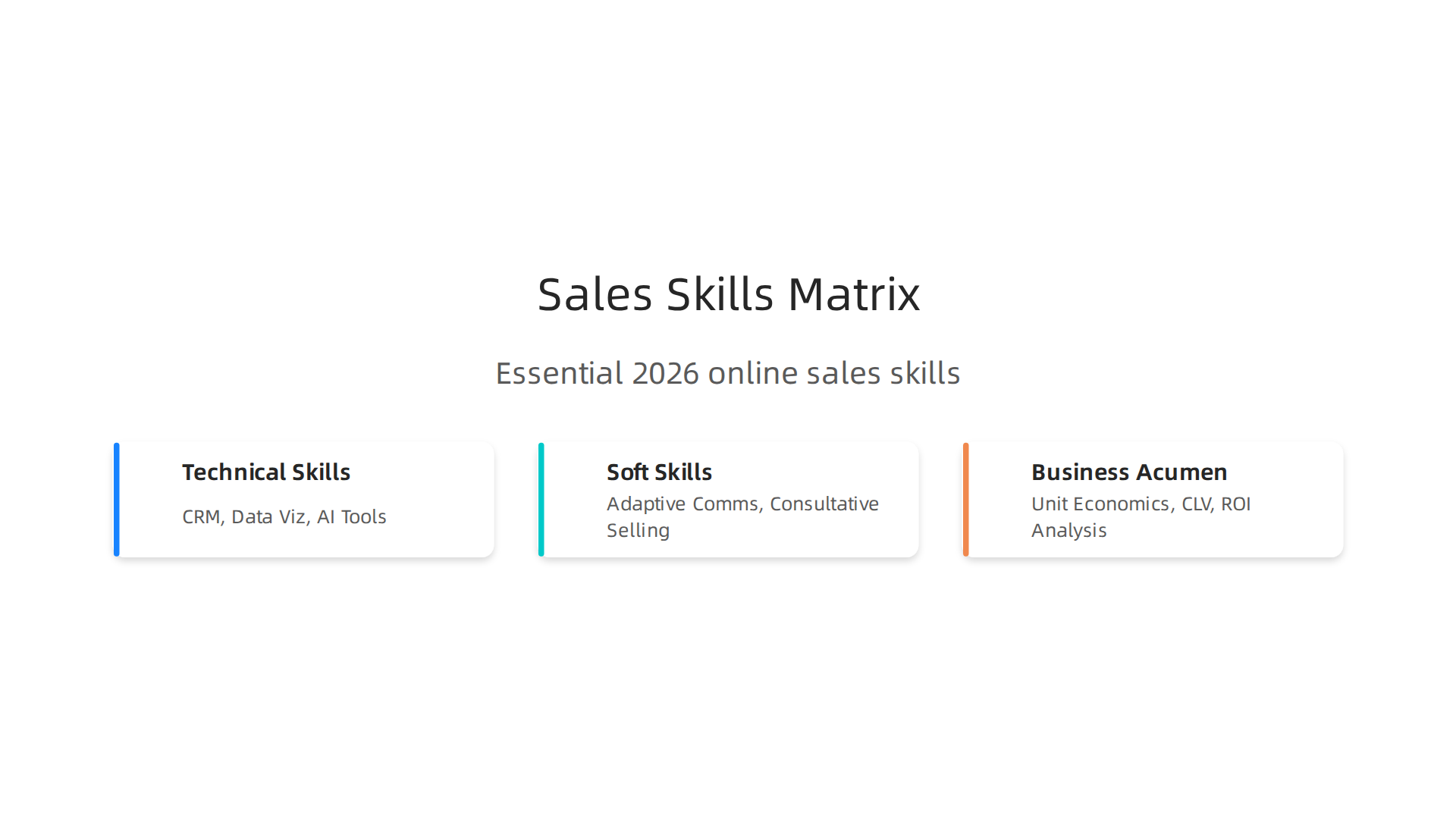
Knowing the EJMR marketing 2026 trends is one thing. But what does that look like in a job description? What specific skills are hiring managers scanning your resume for? Let’s break it down into a clear skills matrix. Think of this as your checklist for becoming a top candidate.
Technical Skills: Your Digital Toolkit
This is about the tools you can use. In 2026, it’s not enough to just know a tool’s name. You need to know how to use it to drive results.

- CRM & Sales Platforms: Proficiency in platforms like Salesforce, HubSpot, or Pipedrive is now a basic requirement. You must be able to manage a pipeline, log activities, and pull basic reports.
- Data Visualization & Analysis: Can you turn raw data into a clear story? Skills with tools like Microsoft Power BI, Tableau, or even advanced Excel for creating charts and dashboards are in huge demand. Employers want you to see patterns and explain what they mean.
- Communication Technology: Mastery of video conferencing (Zoom, Google Meet), collaborative workspaces (Slack, Microsoft Teams), and presentation software is non-negotiable for remote and hybrid teams.
- AI-Powered Sales Tools: This is the big one. With 87% of sales teams now using AI for tasks like prospecting and email drafting, familiarity with AI assistants is crucial. It’s about using these tools to work smarter, not harder. Research shows that 45% of organizations use AI in three or more business functions, including sales and marketing.
Soft Skills: The Human Edge
The tools are important, but the human connection closes the deal. These are the skills that make you stand out from an AI.
- Adaptive Communication: Can you build rapport on a video call as easily as in person? This means clear, concise, and engaging communication in all-digital formats.
- Consultative Selling: This shifts you from a pitch-maker to a problem-solver. It involves active listening, asking insightful questions, and tailoring your solution to the prospect’s unique challenges. It’s the core of modern selling.
- Digital Resilience & Self-Management: Remote work requires discipline. Employers want people who can manage their time, stay motivated without direct supervision, and maintain a positive mindset through the natural ups and downs of a sales cycle.
Business Acumen: Connecting Your Work to the Bottom Line
This is what separates a good salesperson from a strategic business partner. It’s understanding how your day-to-day work impacts the company’s health.
- Understanding Unit Economics: Do you know what it truly costs to acquire a customer (CAC) and how that compares to the revenue they bring? This shows you think like a business owner.
- Customer Lifetime Value (CLV): This isn’t just a buzzword. It’s about seeing a customer as a long-term relationship, not a one-time sale. It guides how you service accounts and identify upsell opportunities.
- Funnel Metrics & ROI Analysis: You should be able to track conversion rates at each stage of your sales funnel. More importantly, you need to prove your return on investment. Can you show that the time and money spent on your activities directly lead to closed revenue? This skill is so valued it’s listed among the top marketing resume keywords for 2026.
Mastering this skills matrix makes you incredibly versatile. You become the candidate who can not only land a deal but also explain its strategic value. These are the exact skills that open doors to high-growth roles and specialized career paths, such as the strategic world of management rights sales. In 2026, your value is a combination of your tech savvy, your human touch, and your business brain.
Cutting Through the Noise: How to Find Legitimate Online Sales Jobs in 2026
You know the skills you need. Now comes the real test: finding the right opportunity. In 2026, the job market is full of options, but not all of them are good. How do you spot a great role and avoid the scams or bad fits? Using insights from the EJMR marketing 2026 landscape, here’s your guide to a smarter, safer job hunt.
Spotting the Red Flags and Green Flags
First, learn to read between the lines of a job posting. Your time is valuable. Don’t waste it on roles that will only lead to frustration.
Common Red Flags:
- Vague Job Descriptions: If the posting is full of hype like "unlimited earning potential" but says nothing about base salary, commission structure, or daily tasks, be cautious.
- "Pay-to-Play" Requirements: Legitimate companies do not ask you to pay for training, software, or a "starter kit." This is a classic scam tactic.
- No Company Information: If you can’t easily find the company’s website, LinkedIn page, or employee reviews, it likely doesn’t have a real operation.
- Generic Communication: Be wary of interview invites or offers that come from personal email addresses (like Gmail) instead of a company domain.
Positive Green Flags:
- Clear Compensation Details: Good postings are transparent. They outline the base salary range, commission plan, and on-target earnings (OTE).
- Specific Responsibilities: They detail what you’ll actually do: "Manage a pipeline of 50+ leads using Salesforce, conduct 15 discovery calls per week, and collaborate with the marketing team on campaign feedback."
- Emphasis on Tools & Training: Companies investing in you will mention the CRM they use, the sales tech stack, and onboarding or continuous training programs.
- Human-Centered Language: Look for mentions of team culture, support, and career growth paths. This aligns with the EJMR marketing 2026 focus on the human edge in a digital world.
Where to Look: Beyond the General Job Boards
While sites like Indeed and LinkedIn are a start, the best opportunities are often found in more focused places. A successful 2026 job search means knowing where to look.
- Niche Remote Job Platforms: Dedicated sites filter out location-based jobs and non-remote roles. Platforms like Remotive, DailyRemote, and FlexJobs curate lists of vetted remote positions, including many in sales.
As one guide notes, using these specialized sites is a key part of finding legitimate remote jobs in 2026.
2. Professional Communities: The "hidden job market" is real. Engage with sales communities on LinkedIn, Slack (like Revenue Collective), or industry-specific forums. Networking here can lead to referrals for roles that are never publicly posted.
3. Direct Outreach (Prospecting Your Next Job): Use your sales skills for your own career. Identify companies in growing industries that fit your interests. Research their sales team on LinkedIn and connect with a hiring manager or sales leader with a personalized message about how you can solve a problem for them.
4. Broaden Your Search Terms: Don’t just search for "remote sales." Experts recommend updating your filters to include both "remote and hybrid roles" to catch all promising leads. Also try "virtual sales representative," "inside sales," or "account executive – remote."
Target Growing Industries for Stability and Growth
Finally, align your search with market trends. Some sectors are expanding their remote sales teams faster than others. By targeting these areas, you increase your chances of finding a stable, growing role.
According to industry analysis, high-opportunity areas in 2026 include:
- B2B SaaS (Software-as-a-Service): Continues to be the powerhouse for remote sales roles.
- Cybersecurity: As threats grow, so does the need for salespeople who can explain complex solutions.
- Healthcare Technology: Digital health platforms and telemedicine services are rapidly expanding.
- FinTech and Digital Payments: An evergreen sector with constant innovation and demand.
Use resources like company blogs and trend reports to research these industries. For example, you can explore where remote and hybrid sales jobs are growing to inform your target list. This strategic approach turns you from a passive applicant into an informed candidate who understands where the EJMR marketing 2026 world is headed. It’s the same research-driven mindset that powers successful careers in specialized fields like management rights sales.
By combining a sharp eye for job postings, smart search tactics, and strategic industry targeting, you cut through the noise. You find roles that are not just legitimate, but are the right fit for the skills you’ve built and the career you want to grow.
Acing the Virtual Interview: 2026 Expectations and Preparation
You found a great job posting. It passed all the green flag checks. Now, you need to pass theirs. The virtual interview is your moment to shine, but the rules have changed.

In 2026, companies have refined how they hire remote sales talent. Being ready for their new expectations is what separates the prepared candidate from the rest.
Here is how to prepare for and ace the modern sales interview.
Understand the New Interview Formats
Forget the simple video call. Companies now use layered processes to see how you work independently and under pressure.
- Asynchronous Video Interviews: You might get a link to a platform where you record answers to written questions. The employer watches later. This tests your communication skills without a live audience. Practice speaking clearly to your camera, and keep your answers concise.
- Practical Sales Simulations: Be ready to sell. You could be asked to do a mock discovery call, craft a cold email for a sample product, or handle a recorded objection. This is where your real skills show. Treat it like a real client interaction.
- Tech Stack Tests: Knowing a CRM is not enough. You may get a brief test in a tool like Salesforce or HubSpot. Or, you might be asked to walk through how you would use a specific tool for prospecting. As remote hiring experts note, demonstrating you can hit the ground running with common sales tools is a major advantage.
Demonstrate You Understand Modern Marketing (EJMR)
Your interviewers want to know you get the big picture. Show you understand how sales connects with modern marketing, a core idea in the EJMR marketing 2026 discussion.
- Talk About Data: Don’t just say you "used leads." Say you "analyzed lead source data to prioritize marketing-qualified leads (MQLs) with a higher intent score." This shows data literacy.
- Discuss Alignment: Mention how you’ve worked with or provided feedback to a marketing team. Ask about their sales-marketing handoff process. This proves you see sales as part of a team, not a solo act.
- Reference Trends: Briefly mention how you stay updated on digital marketing trends that affect lead quality, like content marketing or SEO shifts. It shows you’re a strategic thinker.
Ask Smart Questions That Impress
Your questions tell the interviewer what you value. Move beyond "What’s the day-to-day like?" Ask questions that show you think like a professional who cares about structure and success.
- On Tools & Process: "Can you walk me through the tech stack from lead capture to close, and where the sales team spends most of its time?"
- On Support & Growth: "How does the company invest in ongoing sales training? Is there a formal mentorship or coaching program?"
- On Metrics & Success: "Beyond quota, what are the key performance indicators (KPIs) the team focuses on? How is marketing-sales alignment measured here?"
- On Team Structure: "Can you describe the structure of the sales team? For example, how are SDRs, AEs, and account managers aligned?" Asking this shows you understand specialized roles, much like someone researching a career in management rights sales would ask about specific responsibilities.
Remember, the goal is a two-way conversation. You are interviewing them, too. By preparing for new formats, speaking the language of modern marketing, and asking insightful questions, you prove you are not just looking for any job. You are building a strategic sales career for 2026 and beyond.
Building Your Career Path: Training, Growth, and Income Stability
You aced the interview and landed the role. Congratulations. Now, you need a plan. A real sales career isn’t a random walk. It is a climb with clear steps, training checkpoints, and a strategy for handling the unique ups and downs of commission-based pay. Here is how to build your path for growth and stability in 2026.
Your Progression Map: From SDR to AE and Beyond
Most online sales careers start at the foundation: the Sales Development Representative (SDR). Your goal is to move up. The data shows a clear and achievable path.
- SDR to Account Executive (AE): This is the first major promotion. Industry data for 2026 shows the typical timeline is 12 to 18 months, with high performers making the jump in as little as 10 to 12 months. This role change is about moving from setting appointments to closing deals. It is the most critical career milestone, as noted in modern sales career path planning.
- AE to Senior Leadership: After proving yourself as an AE, new paths open. You can specialize as a Senior or Enterprise AE handling bigger deals. You can move into sales management, leading a team of SDRs or AEs. You might even explore specialized fields like management rights sales, which requires deep knowledge of a specific niche.
The financial jump is significant. In 2026, the median On-Target Earnings (OTE) for an SDR is around $85,000. For an Enterprise AE, that OTE can soar to $265,000 or more. Having a timeline in mind helps you track your progress and have strategic conversations with your manager.
Investing in Your Training and Credibility
You cannot promote yourself without proof. Your skills are your currency. In 2026, showing a commitment to learning is non-negotiable.
- Master the Core Tools: Your daily tech stack (like your CRM) is your workspace. Go beyond basic use. Learn how to automate workflows, analyze pipeline data, and generate reports. Free training from platforms like HubSpot Academy or Salesforce Trailhead is invaluable. Demonstrating you can use these tools strategically makes you irreplaceable.
- Pursue Strategic Certifications: Not all certificates are equal. Choose ones that align with your career goal. Want to move into marketing-aligned sales? A course in ejmr marketing 2026 principles or inbound sales would be smart. Aspiring to leadership? Look for sales management or coaching certifications. These add credibility to your resume and your own confidence.
- Learn from the Best: Self-directed learning fills the gaps. Watch practical guides from top performers, like this video on starting as an AE in 2026. Read the ultimate guides on making the transition from SDR to AE. This proactive approach shows initiative.
Creating Stability in a Commission-Based World
The potential for high income is exciting. The unpredictability can be stressful. The key is to manage your finances like a business.
- Set Realistic Income Expectations: Understand your compensation plan inside and out. Know your base salary, your commission rate, and your quota. For your first year, budget based on your base salary plus a conservative estimate of commissions. As career path analyses note, earnings can vary greatly between an SDR and an AE, so plan for each stage.
- Build a Financial Buffer: This is your most important move. Aim to save enough to cover 3-6 months of essential expenses (rent, food, utilities). This "commission cushion" protects you during a slow quarter or a market shift. It removes the panic and lets you sell from a place of confidence, not desperation.
- Plan for Taxes and Dry Spells: Commission is often taxed differently. Set aside a percentage of every commission check for taxes. Also, sales have natural cycles. Use strong months to fund your savings buffer for the slower periods. This disciplined approach turns variable income into a stable, manageable financial plan.
Your career is a long-term project. By mapping your progression, strategically investing in training, and managing your finances with care, you build more than just a job. You build a resilient, thriving, and stable sales career for the future.
Your 90-Day Action Plan: Leveraging EJMR Trends to Secure Your Role
You have the map for your career climb. Now, you need the daily steps to start moving. A structured 90-day plan turns overwhelming goals into manageable wins.
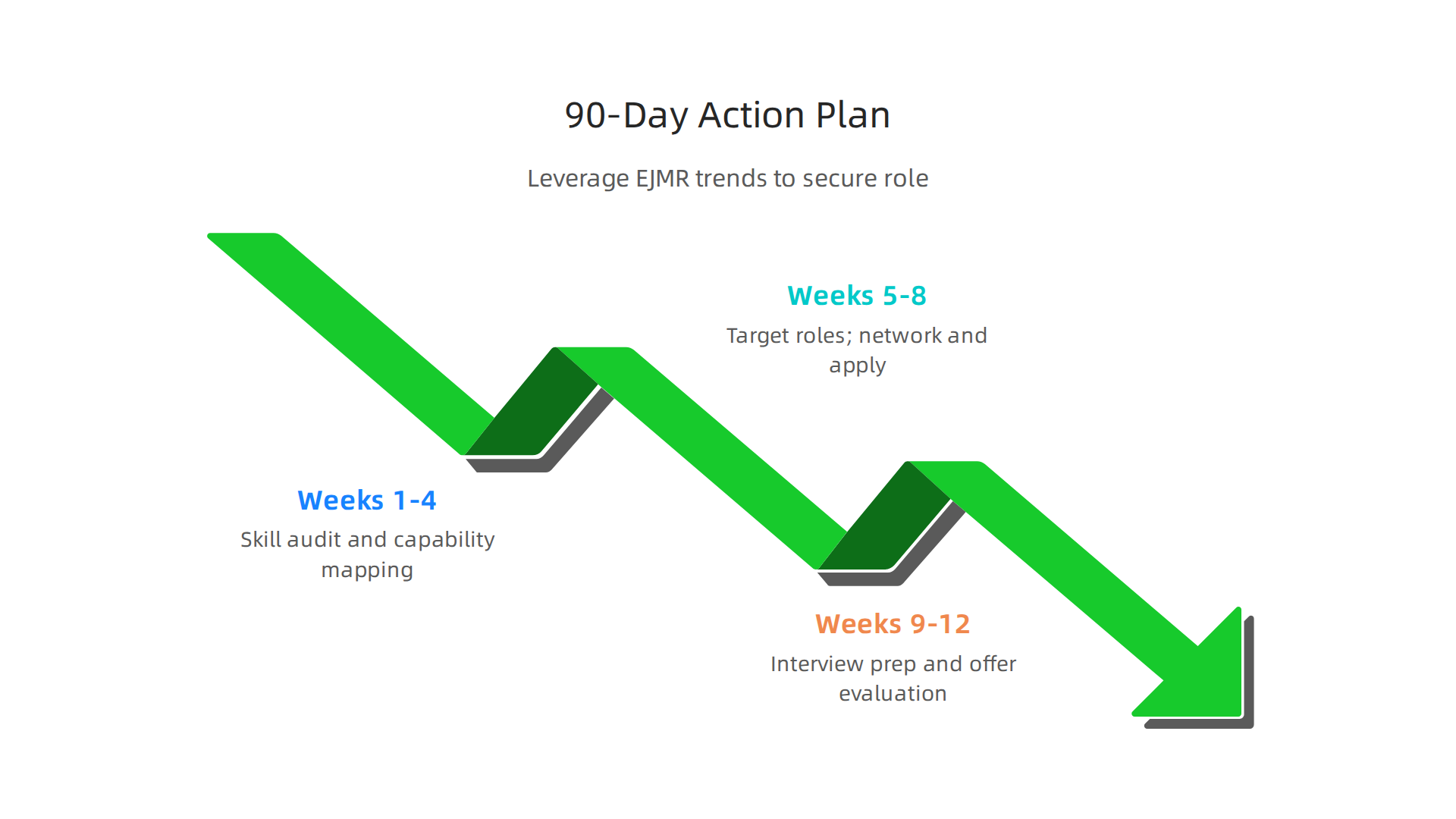
This actionable guide uses 2026’s marketing and sales trends, including insights from ejmr marketing 2026, to get you from planning to offer.
Weeks 1-4: Skill Audit and Targeted Learning
Your first month is for honest assessment and focused study. Don’t guess what skills you need; use the 2026 data.
- Conduct a Skill Gap Analysis: Compare your current abilities against the 2026 skills matrix. According to a major guide on trending sales skills in 2026, employers highly value marketing knowledge, product expertise, and customer relationship skills. For digital marketing roles, a 2026 analysis of the SEO job market highlights AI proficiency and data analytics as critical.
- Enroll in One Core Certification: Choose a single course that bridges sales and modern marketing. A certification in ejmr marketing 2026 principles or a related digital marketing strategy is a powerful signal. It shows you understand how sales and marketing alignment, or Go-to-Market (GTM) strategy, drives business. This directly addresses the top marketing skills employers value, like data analytics and automation.
- Master One New Tool: Deeply learn a platform relevant to your target role. If aiming for Account Executive, master your demo software. For marketing-aligned sales, get certified in a common CRM or marketing automation tool. Practical tool skills are a non-negotiable baseline.
Weeks 5-8: Strategic Job Search and Network Building
With sharper skills, you now hunt with precision. It is time to be strategic, not just sending out resumes.
- Target High-Demand Roles: Focus your applications on positions with proven growth. Data shows that Account Executive and SDR roles remain among the most in-demand sales jobs in 2026. Look for job descriptions that mention the skills you just learned.
- Optimize Your Resume with 2026 Keywords: Your resume must pass the automated screen. Integrate terms from your research. For example, using keywords like "GTM," "ROI Analysis," and "Marketing Automation," which are identified as top marketing resume keywords for 2026, can significantly increase your visibility.
- Build Purposeful Connections: Network with intent. Reach out to professionals in your desired role or at target companies on LinkedIn. Offer value by commenting on their content. If you’re exploring specialized fields, researching a niche like management rights sales can help you connect with experts in that area.
Weeks 9-12: Interview Preparation and Offer Evaluation
The final stretch is about proving your fit and making a smart choice.
- Prepare Trust-Based Stories: For every interview, prepare stories using the STAR method (Situation, Task, Action, Result) that highlight your new skills. Discuss how your understanding of modern ejmr marketing 2026 trends helps you understand customer needs. Frame your answers around building trust and solving problems.
- Ask Insightful Questions: Your questions prove your strategic thinking. Ask about sales-marketing alignment, how the company leverages AI in its GTM strategy, or what a successful first 90 days looks like. This shows you’re evaluating them as much as they are evaluating you.
- Evaluate the Offer Holistically: When an offer comes, look beyond base salary. Evaluate the commission structure, quota realism, benefits, and clear paths for promotion. Use the understanding of compensation benchmarks you built earlier to assess if the offer is fair and supports your long-term career path planning.
Stick to this plan. In 90 days, you will not only be more skilled and connected. You will be confidently stepping into the online sales role you’ve built yourself to deserve.
Summary
This article explains how Economic Job Market Research (EJMR) is reshaping online sales hiring in 2026 and gives a practical roadmap for job seekers. It defines EJMR, shows how companies convert that data into hiring priorities, and highlights three core trends—AI-driven personalization, BI-integrated sales platforms, and demand for data-savvy sellers. You’ll find a clear skills matrix (technical tools, soft skills, business acumen), guidance for spotting legitimate remote roles, and updated interview formats and expectations. The guide also covers career progression from SDR to AE, training and certification recommendations, and money-management tips for commission pay. Finally, it provides a 90-day action plan to audit skills, target high-demand roles, build networks, and prepare for offers so you can move from overwhelm to a focused job search strategy.